• Planning Tools
    • 12-Month Planning Checklist
    • How To Get A Marriage License in Florida
    • How To Get A Marriage License in Georgia
    • How To Get A Marriage License in Tennessee
    • How To Get A Marriage License in South Carolina
    • How To Get A Marriage License in North Carolina
    • How To Get A Marriage License in Alabama
    • Wedding Budget & Tipping Guide
    • Questions to Ask Your Vendors
  • Venues
    • Art Galleries & Museums
    • Ballrooms
    • Banquet Halls
    • Barns & Farms
    • Ceremony
    • City/Downtown
    • Country Clubs & Golf Courses
    • Destination Weddings
    • Historic Locations
    • Hotels & Resorts
    • Industrial/Loft
    • Outdoor
    • Rehearsal Dinner
    • Restaurants
    • Waterfront
  • Vendors
    • Bands, Orchestras, DJs & Entertainers
    • Beauty, Hair & Makeup
    • Bridal Fashion
    • Cakes, Sweets & Desserts
    • Catering, Beverages, Ice Sculptures & Staffing
    • Event Rentals
    • Favors, Gifts, Registry & Your New Home
    • Floral, Décor & Event Design
    • Honeymoon
    • Invitations & Stationery
    • Jewelry
    • Men's Fashion
    • Officiants, Clergy & Other Services
    • Photography & Videography
    • Planning & Coordination
    • Transportation
  • Inspiring Ideas
    • Wedding Ideas
    • Spotlight on Style
    • Real Weddings
    • Styled Shoots
  • Articles & Advice
    • Beauty & Fitness
    • Budget
    • Cakes & Desserts
    • Catering & Cocktails
    • Expert Advice
    • Fashion & Jewelry
    • Honeymoon & Destination Weddings
    • How Much Does It Cost
    • New to the Scene
    • Planning
    • Trending Topics
    • Venues
    • Wedding Colors & Style
  • Magazines
  • Events
Menu
  • Planning Tools
    • 12-Month Planning Checklist
    • How To Get A Marriage License in Florida
    • How To Get A Marriage License in Georgia
    • Wedding Budget & Tipping Guide
    • Questions to Ask Your Vendors
  • Venues
    • Art Galleries & Museums
    • Ballrooms
    • Banquet Halls
    • Barns & Farms
    • Ceremony
    • City/Downtown
    • Country Clubs & Golf Courses
    • Destination Weddings
    • Historic Locations
    • Hotels & Resorts
    • Industrial/Loft
    • Outdoor
    • Rehearsal Dinner
    • Restaurants
    • Waterfront
  • Vendors
    • Bands, Orchestras, DJs & Entertainers
    • Beauty, Hair & Makeup
    • Bridal Fashion
    • Cakes, Sweets & Desserts
    • Catering, Beverages, Ice Sculptures & Staffing
    • Event Rentals
    • Favors, Gifts, Registry & Your New Home
    • Floral, Décor & Event Design
    • Honeymoon
    • Invitations & Stationery
    • Jewelry
    • Men's Fashion
    • Officiants, Clergy & Other Services
    • Photography & Videography
    • Planning & Coordination
    • Transportation
  • Inspiring Ideas
    • Wedding Ideas
    • Spotlight on Style
    • Real Weddings
    • Styled Shoots
  • Articles & Advice
    • Beauty & Fitness
    • Budget
    • Contest & Giveaway Winners
    • Engagement
    • Expert Advice
    • Fashion & Jewelry
    • Honeymoon & Destination Weddings
    • New to the Scene
    • Planning
    • Trending Topics
    • Wedding Colors & Style
    • All Articles
  • Magazines
  • Events
  • About
    • Advertise
    • Who We Are
    • Contact
    • Member Login

Bridal Beauty for All

Navigating Wedding Gown Shopping For Your Body Type

Finding your dream wedding dress can feel daunting, regardless of your dress size. For curvy brides, navigating the high-fashion world of wedding gowns can feel downright impossible. We understand the fear and apprehension that commonly accompanies bridal shopping when you don’t wear a sample size, but we also believe every woman should feel empowered when shopping for her Big Day. If you are a curvy bride-to-be searching for your perfect dress, you should know that it is absolutely out there. The key is having the right mindset, confidence and support system to help you overcome any insecurities or fears to find the dress of your dreams.

Sizing

Let’s start with one of the toughest parts of shopping for a wedding dress – the sizing. When you buy a pair of jeans or a dress off the rack at a run-of-the-mill clothing store, chances are good that the manufacturer employs vanity sizing. As the average size of a woman has increased over time, stores have adjusted the size of their clothing without increasing the nominal size. This means that an item that was sold as a size-twelve in a store in 1950 is smaller than the item sold as a size-twelve today. To make matters more complicated, stores all use their own sizing systems, so it’s entirely possible to wear an eight, twelve and fourteen in jeans that come from three different stores. Your waist obviously doesn’t change from store to store, but rather the number assigned to your clothes has little correlation to the actual measurements of
the garments.

Now here’s where things get psychologically challenging. Wedding dresses are typically made following high-fashion sizing, which is based on European measurement charts. You should expect your wedding dress to be one to two sizes (or more) larger than your typical off-the-rack size. If you already have a difficult time with your number size, having to go up in number can feel soul-crushing. But here’s the thing – you haven’t changed size. You are still exactly the same, so it shouldn’t matter what the tag in your dress says. The reality is that it does matter to a lot of plus-size brides, so what can you do about it?

You have different options for dealing with the emotional impact of your wedding dress size. You can mentally prepare yourself for the size to be bigger, acknowledge the fact that wedding dress sizing runs small and accept the size of the dress you order as a reality that doesn’t affect how you look or feel in your dress. This strategy will work well for a lot of brides, but it isn’t enough for everyone. Another option is to simply not find out what size you are ordering. The sales associate will take your measurements and order your dress size based on your largest measurement, but you don’t have to know what size they order. Simply ask for that information to be withheld or redacted on any form or receipt you need to sign. You can have a friend cut out the tag when you receive your dress and never be the wiser. While this may sound dramatic, if the size of your dress will influence how you feel in it, it’s worth it to keep that negative information out of mind.

Shopping

Where you choose to shop for your gown and who you choose to invite with you will seriously affect your experience. You should put some serious thought and consideration into both decisions before making appointments or inviting anyone along. Your feelings matter the most here, so be careful and cautious.

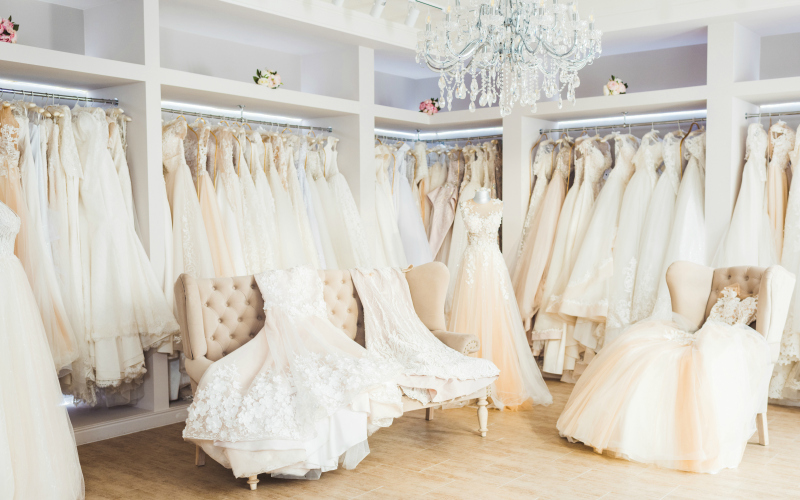
Do some research to find plus-size friendly salons. We’ve got some incredible bridal boutiques in this issue who offer a range of plus-size gowns. Some brides also prefer smaller, more intimate salons where they don’t have to try on dresses surrounded by other brides. If you feel self-conscious, consider booking your appointment in an off-peak time or at a smaller store where you can be assured of privacy while you shop and try on dresses. You’ll also want to make sure you only make appointments at bridal salons that carry sizes you can try on. Sample sizes are generally a bridal size eight or – ten, and it can be challenging to get a true idea of what your dress will look like on you if the dress you try on is considerably smaller. It can also feel awkward and embarrassing to try on a dress that is clipped to you, with giant gaping holes in the back. Avoid this situation by shopping at bridal salons that carry plus-size samples.

Set yourself up for success by creating a support squad who will give you a boost of confidence without any underhanded or judgmental comments. It’s best to go with at least one other person so you have someone to give you feedback and make the experience feel more special. If you are unsure about bringing a crowd, consider a close, supportive friend, parent or family member as your plus-one. Alternatively, some brides find strength in numbers. If having a larger group to swoon over you in pretty dresses feels right, don’t hesitate to invite a crowd. Regardless of the number of supporters you invite, make sure each person included only brings good vibes. Even if your sister expects to be included, you may want to leave her off the list if she is known for offering biting or rude criticism. It might be uncomfortable in the moment, but be picky and only invite those you know will build you up and make sure you feel beautiful.

Alterations Matter

Once you have found your dream gown, don’t trust the alterations to just anyone. Virtually everyone has to have their wedding dress altered, so go ahead and plan for the expense and time requirements of some serious tailoring. It’s vital that you find a tailor who has ample experience with plus-size wedding gowns. A skilled seamstress can add boning, built-in bra cups and other structural support that can make quite the difference in the comfort and silhouette of your gown. Make sure the tailor takes the time to understand any specific concerns you have around the fit and any changes you wish to make. If you fell in love with a ball gown that is just too full for your shape or taste, you can have several layers of tulle or crinoline taken out during alterations. Ask your tailor to explain how any potential alterations will change and affect the fit.

Customization

There’s a wide range of customization available when it comes to wedding gowns. From a completely custom creation to small changes, curvy brides should be discerning when it comes to customizing their gowns. You may find a dress that checks all of your wants, except for the neckline. Don’t despair! See if there is a way to change up the look, like deepening a V-neckline or adding lacy sleeves to a strapless design. You can make some pretty significant changes if necessary.

If you can’t find anything that fits your needs, it may be best to go custom to avoid an ill-fitting gown. Research designers and seamstresses who specialize in custom plus-size gowns and explore the possibilities. Don’t let the potential price tag scare you off from a custom gown – you may be surprised at how reasonable a custom creation can be. Your wedding gown is one of the most important aspects of how you look and feel on your Big Day, so don’t be afraid to spend the time and dollars necessary to find the right dress.

FOR CURVY BRIDES

Curvy women come in all sizes. But historically, finding gowns in sizes larger than 12 has been challenging. That trend is slowly changing, and today more brands are including and even catering to the plus-size market. This means that with a little research, curvy brides can go to a salon and try on gowns in their sizes, something that was once nearly impossible, and there are more styles available than ever before. No one style of dress is better or worse. It’s a matter of personal taste, and how the cut and design of the dress works on each unique body. However, one thing for curvy brides to keep in mind is comfort: strapless dresses, for example, may necessitate significant foundational undergarments or come with stiff built-in boning.

FOR TALL BRIDES

Brides who are six feet tall or more may need to order a dress with extra fabric to ensure a true floor-length gown. Most wedding dress brands will offer this option. However, it’s important to note that the extra fabric is added entirely to the length of the skirt, so for tall brides with average-length legs and long torsos, the extra fabric will not necessarily help the fit. Because of this, it’s best to find a dress with a bodice that works regardless of the promise of added length. Alternatively, if a tall bride falls in love with a dress that does not offer the option of extra fabric, a skilled tailor can often find creative ways to add length with a subtle lace panel or new layers.

FOR PETITE BRIDES

For brides who are shorter than five feet, four inches, it can be helpful to buy a gown that is cut for their shorter stature. Many brands offer a petite version of their dresses, and in this case, it usually means that the entire dress is scaled down proportionally for shorter frames, not just that the skirt is shortened. However, the challenge for shorter brides is that salons rarely carry petite sizes in stock, so the petite bride is left to try on a gown that is too long overall and hope that the problem will be solved by ordering the petite version. This can occasionally lead to some fairly extensive alterations when the dress arrives, so plan accordingly.

FOR ATHLETIC-BUILD BRIDES

Wedding gowns are generally designed with the classic dress-form mold in mind — think curves in the bust and hips, and a narrowing at the waist. Brides with an athletic build who do not have these pronounced curves may struggle to find a wedding gown cut for their straighter proportions. One trick is to look for gowns in a fabric with a little stretch that will accommodate different shapes. For athletic-build brides who have a dream of a specific fabric or style of gown but are having trouble finding the right fit, a custom design may be the best option, as the designer can tailor everything to the bride’s specific measurements.

Self-Confidence

You deserve to feel incredible and look amazing on your Big Day. Prepare mentally, physically and emotionally for wedding dress shopping to give yourself the self-confidence to enjoy the experience. Being intentional about your attitude and outlook can dramatically shift the tone of your shopping day.

If you’re planning on trying to lose weight before your wedding day, it can be tempting to put off dress shopping until you’re down a few pounds. However, don’t wait too long or you won’t have time for a made-to-order gown. Most wedding dresses take around at least eight months to arrive, and you’ll need a month or two for alterations once you receive your gown, so plan accordingly. Remember, your partner loves you for who you are, and they think you look amazing exactly as you are right now. There’s nothing you need to change in order to find your dream dress.

Once you’ve made your bridal appointments, it’s time to get ready for the day. It’s good to have an idea of the styles you like, but it’s definitely not required. Forget any notion of anything you aren’t “allowed” to wear. Plus-size brides, just like every other bride, look good in a wide variety of styles – ball gowns, fit-and-flare, mermaid and more. Bridal fashion is extensive and your size does not determine what is available to you, so don’t rule out that deep v-neckline, illusion back. Think about when you feel the most confident and what aspects of your body you want to highlight. If you love your full hips or your strong shoulders, you may want to find a style that accentuates the parts of your body you’re proud of.

To physically prepare for the day, consider laying off salty, fatty foods for a few days before your appointment. Drink plenty of water and get ample sleep. These small efforts will leave you feeling stronger and physically ready for trying on dresses. Wear an outfit you love and take the time to fix your hair and follow any beauty habits that make you feel better. Eat a healthy breakfast and make sure you give yourself plenty of time to get to your appointments on time. Feeling calm and confident will go a long way to making your fitting a success.

You are your own worst critic, so do a little emotional homework before taking on the bridal boutiques. Make a list of the things you love about yourself: physical traits, personality characteristics and achievements. Ask your partner to give you a pep talk if that feels helpful. Focus on the positive and think about how you want to feel walking down the aisle on your wedding day. Go into your appointment with the knowledge that you will find a dress that makes you feel like a bride. Acknowledge any concerns or worries you have, name them and let them go.

Inspiration

One of the best ways to feel confident about your body is to surround yourself with images of women with a body shape that reflects your own. Don’t build Pinterest boards and wedding dress inspiration that only feature thin models. Find body positive photos of plus-size models, real life brides and other curvy women with whom you can identify. Seeing wedding gowns on women similar to yourself will help you feel more comfortable when you try on a wedding gown and look in the mirror for the first time.

Along with curating a collection of curvy brides for dress inspiration, you should also take some time to find emotional inspiration. Consider how you want to feel on your wedding day. Maybe it’s most important that you feel sexy or perhaps you want to feel like a princess. These emotions, unique to each individual bride, should drive your wedding gown shopping more than anything else. Focus on the emotions that are most predominant when you imagine yourself as a bride on your own wedding day and keep those feelings in mind when trying on dresses. Don’t buy something that doesn’t fulfill your emotional desires, even if it fits well or your friends love it.

Celebrate

Make a big deal out of your wedding dress shopping day (or days)! Invite your best supporters, look and feel your best, and then pop some bubbly and celebrate once you find your dress. Make a whole day out of it – with a stop to get your nails done, a celebratory brunch or a relaxing spa treatment after the shopping is over. Even if you aren’t looking forward to dress shopping itself, bookend the trip with things you do love so you have something to look forward to. The excitement and enthusiasm will naturally carry over to your dress appointment as well.

Remember that your wedding day is about you and your partner – not a model you saw on Pinterest. Your confidence and inner beauty reflect on the outside, so feeling good about yourself and being confident will do wonders for how you see yourself in that bridal salon mirror. You and your wedding dress are no less important than anyone else just because you have a larger number on a tag in your gown. It’s also a healthy practice to remind yourself that everyone compares themselves to others and feels insecure about something, so there’s really no escaping those doubts. You can make sure your wedding dress shopping experience is fun, successful and enjoyable by setting the right tone and mood and going into it with a positive outlook. The truth is that you will find a dress that works for you! It might not be what you expect, so always keep an open mind when trying on different styles, but you will slip into a gown that feels just right and that makes it easy to imagine walking down the aisle. When that happens, pop some bubbly and celebrate.


Make an appointment with these local bridal salons today.

View Post

Décor to Adore

While every part of your wedding day has opportunities to be unique, wedding receptions are the place to let your personalities truly shine. Receptions give you a lot of freedom to play up your color scheme or theme. But if you are a bit intimidated by the wide world of wedding décor, you’re not alone! Choosing just the right furnishings and decorations to capture the feel you want for your reception is no easy feat – but it’s far from impossible. Read on to find out how to pick out the right décor to achieve the wedding reception you have been dreaming about.

Know Your Style.

If you have not decided on an aesthetic for your wedding yet, that’s priority number one. Pinterest can be your friend when it comes to getting inspiration for your wedding reception, but sometimes it can also make things more difficult. It’s all too easy to get lost in the bottomless abyss of wedding boards, but if no consistent style emerges in your searches it can be challenging to know just exactly how you want your reception to look.

Think of your wedding as a whole and how your photos will look all laid out in a photo album. There should be a visually pleasing consistency tying the day together. You don’t want the elements of your wedding to clash, so it’s important to find a theme or style and stick with it so that it flows nicely.

Remember, Pinterest is not your only source for décor inspiration. If you want your wedding reception to be infused with your and your fiancé’s unique personalities, all you have to do is search for elements already present in your life. Take inventory of how the two of you decorate your home or office. Notice if there are clothing styles you absolutely love. These things can act as a springboard to finding your own personal style.

Table Matters.

There is perhaps no single element more important to a perfect reception than putting together the right table décor. Not only will the design be repeated across the entire room, it’s also the element of your wedding your guests will have the most interaction with. This makes your tables one of the most important features of your wedding reception.

When it comes to table arrangements and place settings, the possibilities are nearly endless. You could keep it simple with nice floral centerpieces matching your wedding colors for a traditional look. Elevated floral centerpieces, such as tall fluted vases, are growing in popularity. Not only do they allow your guests to see each other from across their tables, but they also give an opulent and romantic look at your reception.

If you want to step it up with something that will really wow your guests, don’t be afraid to get creative. Personalize your tables to help your guests feel more connected to you. For example, if you and your fiancé are movie buffs adding quotes about love from your favorite films to each place setting is a great way to show off that side of your personality. Likewise, if you are bookworms you might consider assigning each table a literary classic theme. Your imagination is the only thing holding you back.

Do not forget to design your head table – the place where you, your new spouse, and your bridal party will sit. Or, you might decide to do a sweetheart table, with just the two of you. It’s where your guests’ eyes will be naturally drawn to when they first arrive at your reception, so you want to make it spectacular. Consider the arrangements you are planning for the guests’ tables and think grander. Again, you want to keep the consistency while still making your head table stand out. Foliage and floral table garlands draped elegantly across the length of the table are beautiful options that are growing in popularity.

Light It Up.

Choosing the right lighting is everything when creating the perfect ambiance for your wedding reception. If you don’t want to rely on the lighting available at your reception venue, there are plenty of options for manipulating the lighting to achieve the feel you’re going for. Festoon lighting, commonly known as string lighting, is particularly appealing to many couples wanting to give their receptions a whimsical, fairytale vibe. It provides magical accents that can be used to create a canopy effect, especially when set against a backdrop of tulle or silk. String lighting is perfect for outdoor spaces and can be draped over bushes, woven within tree branches, or strung around banisters.

For a more industrial look, Edison bulbs offer a contemporary twist on a vintage classic. They offer a cool, rustic flair that makes a perfect companion to warehouse or barn venues and their rough-hewn quality makes them great centerpieces. Hanging Edison bulbs above the head table or around the venue also creates a great accent to your décor. Lanterns are another great option to add a hint of enchantment to your wedding reception. Not only do they make gorgeous centerpieces, but they can also be hung around your venue to create a dreamy, romantic atmosphere. They are especially suited to outdoor or summertime affairs.

To create an air of excitement and variety, consider pattern projections, also called a gobo, that can dance across the walls along with your guests as the party gets underway. They don’t have to be elaborate – in fact, it’s probably better that they are not. Just something simple to display that will help create a romantic atmosphere. In recent years, it’s been common for newlywedded couples to get their first initials or a custom monogram projected onto the dance floor.

The Extras.

So, you have figured out the theme you want. You have your tables and your lighting all squared away. Now comes all the little miscellaneous goodies that will make your guests go, “aw!”. These include your gift table, guestbook display, dessert station, bar set-up, cake stand, wedding favor display, and any other elements you want to include in your reception.

A table of pictures showing the progression from childhood to your engagement of both you and your new spouse is an adorable way to tell your love story. It also gives your guests a chance to see more of your milestones while pulling at the heartstrings of Mom, Dad, and even Aunt Sally.

If you have loved ones who have passed away, you might consider reserving a place for them at your reception by giving them a table of their very own. This is a beautiful and reverent way to honor those special people who regretfully can’t be with you on your special day. At this point, we probably sound like a broken record, but when planning your design, always keep your core aesthetic in mind. Remember that you want everything to come together and flow seamlessly.

The possibilities are truly endless for creating beautiful and personalized wedding receptions. While it might feel a bit overwhelming at first, just remember a little goes a long way. Don’t feel like you have to go overboard with decorations. You might run the risk of it looking too busy or cluttered. A few well-placed, deliberate décor decisions can make all the difference when planning the design of your reception. As long as you are being true to the unique style of you and your fiancé, your wedding reception is bound to be a truly breathtaking affair that perfectly represents the love the two of you share.

View Post

Lifelong Keepsakes

8 Ways to Turn Your Wedding Items into Keepsakes

The image of my grandparents’ wedding album is permanently imprinted in my mind. Its pillowed, white, lace-trimmed cover sat tucked behind the glass of their china cabinet next to an equally fluffy ring bearer pillow and a cracked, brown leather guestbook. They were lifelong keepsakes that held a special place of honor from the moment they moved into their house after their wedding, until they retired to Florida over 50 years later.

Most of us can recall an image from our childhood like this, the hutches and china cabinets of our parents and grandparents whose wedding keepsakes held similar, lifelong places of honor. While the marriages and the memories were no less special then than they are today, for our Pinterest-savvy generation, the standard wedding keepsakes just do not cut it anymore. If you have spent months planning your dream wedding, there is no doubt you are going to want the keepsakes from your big day to be as uniquely special as the day itself. Here are eight great ways to turn your wedding items into lifelong keepsakes; the kind you will want to keep on display for decades to come.

1. Get Creative with the Guest Book.

While my new hubby and I love flipping through our guest book every now and then (usually on our anniversary), most of the time it is tucked away on a shelf in the closet of our home office. If you are looking for fun and creative ways to make your guestbook a keepsake you will want to display all year round, think outside the box or, outside
the “book,” if you will. Invite your guests to sign another item; something that speaks directly to who you and your new spouse are. Did you go backpacking across Europe before tying the knot? Invite your guests to write their notes to you on a vintage-feeling map of the continent, one you will be thrilled to hang in your home. Are you both classic rock lovers? Leave a few vinyl records out on a table and invite your guests to sign them with paint pens. Consider creating a “message in a bottle” style guestbook by decorating a wine bottle (or multiple depending on your guest count) with your names and wedding date. Invite guests to tuck away notes or words of
wisdom that you will love to read for years to come.

2. You Cannot Go Wrong with a Photo Booth.

Photo booths have been making appearances at weddings for years now and trust me when I say they never, ever get old. Most photo booth companies will allow your guests two copies of each picture strip they snap: one for them, and one to paste into a keepsake album for you! There is nothing like flipping through an album of crazy selfies post-reception. Not only will you laugh over all the fun your guests had, you will also have hard evidence that their photos only got goofier as the night went on.

3. Upcycle Some of Those Fabrics.

This is a great way to give your wedding dress, your ring bearer pillow, your garter – basically any linen that you purchased instead of rented – a second life. There are tons of creative ideas for upcycling the fabrics you selected for your Big Day. From using pieces of your bridal gown for baby clothes or a baptismal gown (if kiddos are next on your to-do list) to repurposing your table runners as fun throw pillows, you definitely have more options than just storing them in a mothball-filled box in the attic.

4. Invest in a Cute Sign.

In other words, not something that you will just roll up and stick in the garage for years. Do you and your newly-wedded love to entertain friends and family around your spacious kitchen? Consider a sign for the hors d’oeuvres or dessert table, inviting your guests to feel welcome and dig in – something that will look cute at your wedding and great on your kitchen island later. Are you an outdoorsy duo? Maybe a distressed wood sign placed outside the reception, painted with your names or a favorite quote is more your style. After the wedding, display it near your front door or in your garden.

5. Repurpose Those Centerpieces.

When selecting centerpieces, think longterm. Items like mason jars or square candle votives not only make great table arrangements, they are also timeless enough that you can use them in your home for years to come. Vintage teacups make great wedding planters and afterward your kitchen will be fully-stocked for teatime. But you do not necessarily have to plan on just tossing those floral arrangements out, if you already love having greenery around your home, consider using succulents for your centerpieces. They are durable enough that they will last through the wedding and stick around long afterward. Lastly, you loved your bouquet, so why not preserve it? Have it made into a piece of jewelry – think earrings, bracelet or a pendant drop for a necklace – you will enjoy your beautiful bouquet for years to come.

6. Do Not Monogram Everything.

From shot glasses to champagne flutes, you will never be more inclined to monogram than you are in the weeks and months leading up to your wedding day. Don’t get me wrong, whether you are swapping last names, hyphenating, or keeping things traditional, there’s something about two names becoming one that is totally worth celebrating. But with that said, in five years, are you really going to want to invite your new boss and his wife over to toast your recent promotion with heart-and initial
etched wine glasses? If yes, then by all means, you monogram your little wedded heart out. Otherwise, you might consider something just as personal, but a little more, shall we say, evergreen? Do you remember the exact spot where you and your soon-to-be spouse met? If so, a quick online search can tell you the coordinates. “41.8781° N, 87.6298°W” looks super cool on a shot glass and, it makes for a good story. Maybe a line from your favorite song would look great etched along the base of a wine glass. Did you get the same, regrettably impulsive, tattoo in college? (Four-leaf clovers, moon and stars – you know the kind I’m talking about). You might cringe at those tiny skulls on your left hips now, but they might be the perfect design for a one-of-a-kind whiskey tumbler set. All I’m saying is, think outside the monogram.

7. Do Not Be Afraid to Think Big.

This is an idea I am loving lately – but it’ll take a little more planning than your standard wedding keepsake. Consider snagging a vintage rocking chair or a cozy bench to set up somewhere near the guestbook, or use it to replace your guestbook entirely! Place some fancy paint pens near it and invite your guests to write you loving messages or doodles during the reception. This keepsake will look completely adorable on your front porch or back deck for years.

8. Consider a Time Capsule.

Maybe you are all set at home: you have enough pillows, drinking glasses, and teacups to last you a lifetime. Or, maybe displaying your wedding memories all year-round just is not your style, no matter how much you might love all that swag on the big day. A wedding time capsule might be just what you are looking for. Pick a capsule that speaks to you and your spouse: a vintage trunk, a glass canister, repurposed wine bottle – practically anything works. Fill your “capsule” with items from your wedding day (notes you wrote to one another, personalized napkins, your hair clip, candid photographs that didn’t quite make the wedding album — the list goes on. Seal the capsule
until a special anniversary and tuck it away until the next Big Day.

View Post

Virtual Venue Tour: Grand Hyatt Atlanta in Buckhead

Nestled in the heart of Buckhead, The Grand Hyatt Atlanta combines our stunning ballrooms and public spaces with our tranquil Zen Garden and awe inspiring waterfall to give your guests an unparalleled experience they won’t soon forget. Our passion for service and commitment to providing outstanding cuisine, beautiful decor, and our signature Hyatt care make us the perfect location for any occasion. We look forward to welcoming you to the Grand Hyatt Atlanta in Buckhead very soon!

(more…)

View Post

You Are Cordially Invited

The rules that accompany wedding invitation etiquette can be complex. In order to make sure you dot your i’s and cross your t’s, we have partnered with our experts to provide the proper do’s and don’ts that go along with save-the-dates, invitations, and thank-you notes.

DO:

  • Do send save-the-date cards six to eight months before your wedding. If you are planning on having a destination affair, informing your guests earlier is always appreciated so that appropriate travel arrangements can be made.
  • Do send wedding invitations at least eight weeks prior to your Big Day. Eight weeks provides guests ample time to RSVP as well as time for you to receive a headcount for planning purposes.
  • Do work closely with a stationer who understands your vision for not only your invitation suite, but for your wedding day as a whole. This is often referred to as ‘branding’ your wedding. Your invitation suite should have one cohesive look that provides guests with an idea of the look, feel, and style of your wedding. Think of your invitation as a preview for the main event. Still unsure of the look you want to achieve for your wedding day? Stationers have a portfolio of their work that can be used to gain inspiration about potential color combinations and themes.
  • Do utilize proper titles when addressing guests such as Ms., Mrs., Dr., or Mr.
  • Do supply guests with the appropriate postage for the RSVP cards or envelopes. This task should never be left to the recipient.
  • Do take a sample invitation to your local post office to verify if additional postage is required prior to mailing out invitations. Depending on the size and weight of your invitations, additional postage might be required. The last thing you want is to come home to a mailbox full of returned wedding invitations since the appropriate postage was not initially used.
  • Do order the appropriate number of invitations. Many couples find themselves having to place multiple orders due to a miscount. By planning your guest list well in advance, you will avoid accruing unnecessary costs from multiple orders being placed.
  • Do provide guests with directions and information regarding the ceremony and reception locations. Include maps, lodging, and dining information, as
    well as an email address or telephone number of someone that can be contacted if necessary.
  • Do express gratitude to your guests and wedding vendors by sending them handwritten thank-you notes after your wedding.

DON’T:

  • Don’t send save-the-dates to guests unless you are certain that you will invite them to your wedding. Some venues have a maximum number of guests that can fit into their space. Confirm with your venue that their space fits your guest list prior to sending save-the-dates to avoid having to retract your invitation.
  • Don’t use any form of mailing labels as this leaves guests with an extremely impersonal feeling. Handwrite your envelopes or, if handwriting isn’t your strongest suit, hire a calligrapher. Remember, your invitations are the first impression that guests are given of your wedding.
  • Don’t offer multiple response options to your guests. Providing an email response, online RSVP, and a mailing card results in confusion which can cause extra work for couples as they try to finalize their head count. Simplify the process and provide guests with one way to respond.
  • Don’t be untidy. When placing the invitation suite into the envelope all elements should be on top of one another according to size with the smallest pieces in the front and the largest pieces in the back. Slide everything into the envelope with all text facing upwards so that when recipients open your invitation they will be able to read your invitation with ease.
  • Don’t use abbreviations on the invitation or the envelope.
  • Don’t email thank-you notes to your guests. Your family and friends spent the time not only picking out a gift to celebrate your Big Day, but also took the time to celebrate with you. They deserve a handwritten note of appreciation within 12 weeks of your wedding.

Browse Atlanta area invitation and stationary vendors here.

View Post

Haute in the City

Location: Loews Chicago Hotel

Photography: Rick Aguilar Studios

Styling: The Wedding Dresser

Hair: Zazú Salon

Makeup: Bridal Brigade

Videography: Newlyweds Cinema

Nails: Tara Kadar

Prop Stylist: Amanda Wolfson Productions


View Post

The Words That Shape Us

DC-Lillian-Rose Venue-SIX10 01 (1)
DC-Lillian-Rose Venue-SIX10 02 (1)
DC-Lillian-Rose Venue-SIX10 03 (1)
DC-Lillian-Rose Venue-SIX10 04 (1)
DC-Lillian-Rose Venue-SIX10 05 (1)
DC-Lillian-Rose Venue-SIX10 06 (1)
DC-Lillian-Rose Venue-SIX10 07 (1)
DC-Lillian-Rose Venue-SIX10 08 (1)
DC-Lillian-Rose Venue-SIX10 09 (1)
DC-Lillian-Rose Venue-SIX10 10
DC-Lillian-Rose Venue-SIX10 11
DC-Lillian-Rose Venue-SIX10 12
DC-Lillian-Rose Venue-SIX10 13
DC-Lillian-Rose Venue-SIX10 14
DC-Lillian-Rose Venue-SIX10 15
DC-Lillian-Rose Venue-SIX10 16
DC-Lillian-Rose Venue-SIX10 17
DC-Lillian-Rose Venue-SIX10 01 (1)

The Team:

Planner/Stylist: Lillian Rose Events

Floral & Décor: Phillip’s Flowers – Elmhurst

Cake & Sweets: Vanille Patisserie

Stationery: MAXE Designs

Rentals: BBJ Linen; Dish & Décor Vintage Rental

Venue: Venue SIX10

Photography: Ashley Galminas Photography

Vote Here

View Post

Day-Of Anxiety Relief

Tips and Tricks for When You Get Overwhelmed

Stage fright walking down the aisle, that weird thing your hair is doing, or the weather forecast gone awry, these are just some of the factors that can induce wedding day anxiety. The good news is, there are tons of tips and tricks for keeping it together when you start to feel totally overwhelmed.

A Little Lavender Goes A Long Way.

In your day-of bridal survival kit, consider tossing in a small bottle of lavender essential oil. lavender oil has long been studied for its calming properties, helping to eliminate
anxiety and soothe stress. a couple of drops on the inside of your wrists or on the soles of your dance-fatigued feet, followed by some deep breathing, can totally Zen you out in a pinch.

Plan for Plan B.

Planning for plan B isn’t easy. You had your heart set on first-look photographs outdoors and it’s pouring rain. now what? A great wedding planner (or a bestie who’s been there) can help you plan for plan B, before the wedding. That way, you will have a solution on hand, one that will keep your day from going totally off the rails.

Have A Member of Your Bridal Party on Call.

Do you keep missing the tray of mini quiche appetizers because yet another cousin has pulled you aside to say hi? While making your guests feel welcome is critical wedding day etiquette, you’re also entitled to a break from the chit-chat. Having a member of your bridal party nearby will give you time to relax and refuel for a second wind.

Have A Chat With The DJ.

Feeling like you have not had enough one-on-one time with your new spouse? Give the DJ a heads up that you would like to take things down a notch for a couple of songs. Take advantage of this time to reconnect with one another, even if it’s just for three minutes to waltz to “When a man loves a Woman”. For a day dedicated to celebrating the two of
you, surprisingly, you see very little of each other once the festivities begin.

Avoid That Impulse To Hit The Open Bar.

Normally, an extra glass of wine or two, to help you unwind after a long day is entirely fair game. But, if you find yourself repeatedly hitting the open bar to relieve that wedding day anxiety, you might want to think twice. From being too buzzed to appreciate memorable moments to getting a little sloppier than intended, using the open bar as your anxiety outlet is probably best avoided. save those celebratory sips for the honeymoon.

View Post

Ceremony Essentials

What to Plan Prior to Saying, “I Do!”

While every couple’s wedding is unique, when it comes to planning the Big Day, it often seems that a large amount of focus and energy goes toward planning the perfect reception. Of course, the reception and all of its intricacies are indeed a big undertaking – but it’s only one part of your wedding day. The reception is a celebration of the
ceremony that precedes it, and planning the ceremony takes time and effort as well. As you work toward putting together your perfect day, consider these seven key ceremony aspects.

1. The Angles.

Many ceremonies have a pretty standard set-up: the couple and officiant are up front, the bridal party is on either side, and the guests are seated in rows (with an aisle in-between). But that doesn’t mean every ceremony looks that way. Depending on your venue, the layout might be slightly different. Make sure you discuss with your wedding planner or the venue manager exactly how everything will look. Some questions you may consider asking include: Where will you and your officiant stand? Will you be on a platform elevated slightly above your guests, or on the same level? Where will your bridal party stand or sit? Where will your guests sit? Will everyone be able to see the action?
It’s worth having a conversation with your photographer and videographer once you have a concept of the layout, so they can ensure they’ll be able to get the photographs they need.

2. The Duration.

If you’re following a fairly traditional ceremony (such as a religious one), the length may be dictated by the predetermined elements of that ceremony. If not, it’s a good idea to consider how long you ideally want your ceremony to last before figuring out the individual parts of it. Do you want it to be a short and sweet 20 minutes and get your guests quickly to cocktail hour? Or do you want to take more time – perhaps 45 minutes to an hour – to incorporate more components that are important to you? Keep in mind that the length of the ceremony affects the rest of your schedule as well. When deciding on ceremony length, try mapping out a rough itinerary for the day, working backward from your reception. If the ceremony is 45 minutes, for example, what time will you need to start in order to get you and your guests to the reception on time? If the ceremony and reception are at the same venue, what time will you need to start to ensure the cocktail hour starts on time?

3. The Order of Events.

If you are putting together your ceremony without following a predetermined layout, it’s up to you to decide the order of events. Some of the most traditional elements of a ceremony include the processional, the officiant’s greeting and message to the couple, the declaration of intent, the readings, the vows, the exchange of rings, the pronouncement of marriage, the kiss, and the recessional. There are of course certain components that clearly fit into certain spots, but you have some freedom with the order of the ceremony, after all, it’s your ceremony. While you may find that plenty of couples do the declaration of intent immediately before the vows, for example, it’s completely fine to swap those two, or include a reading in between. You can intersperse a few readings throughout the ceremony or have them read consecutively. Try “storyboarding”
the ceremony: write each element on a small piece of paper, lay them out in order, and then play around with them until you find something that feels right for you and your fiancé.

4. The Events Themselves.

One of the most fun parts of planning your ceremony is deciding what elements you’ll include. Again, there are plenty of traditional components to a wedding ceremony, but you can decide which of those to use and not use, as well as any additional “events” you may fancy. The decisions can be based on whether the ceremony is religious, non-denominational, or perhaps a fusion of two different cultures. The ceremony can be based on what speaks to you and what best represents you as a couple. For example, you may want to include a memorial to loved ones, a thank you to your guests, a “Blessing of the Hands,” or a musical performance, the options are limitless.

Customize the content and wording of your Big Day as you would like. Don’t feel constrained to only the most common wedding readings. For example, if you want someone to recite the lyrics of your favorite song, go for it! And when it comes to things like the declaration of intent, there are many variations your officiant can use leading up to the “I do”. Browse online and find versions that really speak to you. Many people choose to incorporate a mini “unity ceremony” within the larger ceremony. If you go that route, consider what style of unity ceremony you would like – such as mixing two different colors of sand into one glass vase or using two separate candles to light one unity
candle simultaneously.

5. The Music.

There are a few things to think about when it comes to ceremony music. First, decide where you want music to be incorporated into your ceremony. Will it only be during the processional and recessional? Do you want anything to play softly in the background of events like the unity ceremony or ring exchange? Do you want to include a vocal or
instrumental performance in the middle? Once you’ve made those decisions, you can move on to choosing the tunes and how the music will be played (such as live instrumentals via a string quartet or harp, a live vocalist, or recordings played over a speaker). If you’re working with a musician, they can likely play you some samples and help you decide what direction to go with your song selections.

6. The Participants.

The participants include the usual suspects: you, your future spouse, and your officiant, of course. But, who else will be involved in your ceremony? What roles will your bridal party play in the ceremony? Will they stand the entire time on either side of you or will they sit in the front row? Are there any additional tasks you need to assign them (like holding bouquets or rings)? Beyond bridesmaids and groomsmen, consider how you might incorporate other important people into your ceremony. Perhaps you’ll have two parents light the individual candles ahead of the unity ceremony or ask a close friend to do a reading.

7. The Physical Elements.

Think about what types of physical elements to include in your ceremony. Will you get married under a chuppah or wedding canopy? If so, plan ahead to secure the purchase or rental of one along with any additional components, like silk draping or an additional floral display. Don’t forget to confirm the logistics of delivery, set up, and break down. Then, there are the smaller things such as an aisle runner, a microphone, and a table for the unity ceremony. Many items like candles, chairs for your musicians, programs, as well as a card box may seem like small details that can be figured out last minute, but those small details can add up to big headaches when you’re trying to take care of them the week of your wedding. Get ahead of it by making a list early on, checking off when you acquire the items, and then delegating the plan to get each piece to the ceremony on time.


Written by Emma Sarran Webster

View Post

The Dish on Wedding Registries

By E. Ce Miller | Photography by TWA Photographic Artists

Setting up the wedding gift registry might be every engaged couple’s single favorite part of wedding planning. Except, maybe, for cake tasting! And honestly, who can blame you? You’re basically shopping for all those splurge-worthy items you have always wanted but never really needed, without actually spending any money yourself. Plus, if you rock it old school (aka: actually register for gifts in a store, in person) you get to use one of those super-fun barcode scanners. If you’ve never done this before, wielding a barcode scanner comes with a surprisingly exhilarating sense of power, use it wisely.

But like every other element of wedding planning and prep, setting up your wedding registry comes with its fair share of etiquette, and some helpful guidance to go with it. Here are seven things to keep in mind while setting up your wedding registry – guaranteed to keep you and your gift-giving guests happy.

1. Choose Your Price Points Mindfully.

Before you even start to put together that gift registry, really think about who you’re inviting to your wedding, and plan your wish list accordingly. Be sure to have a few big-ticket items for those folks who you know are going to want to splurge on you, while also being courteous of anyone like your old college roommate and those co-workers still paying off student loans who might be operating with a more modest budget. The bulk of your registry items should fall somewhere in the middle of your highest price point and your lowest – and a good rule of thumb is to expect guests to spend around the same amount of dough as you are budgeting per-head for your Big Day, give or take.

2. Consider Exactly The Kind of Wedding You’re Having.

Naturally, if most of your guests live locally and will have minimal travel expenses, they’re going to have more to offer in the gift-giving department. If you are asking your guests to venture across the country – or even around the world – to attend your (undoubtedly, fabulous) destination wedding, keep that in mind when you’re registering for gifts. Make sure your expectations take into account what your gracious guests will already be spending just to attend your wedding – both in travel costs and in any time they might need to take away from work. Also make sure you set up your registry so that everything is delivered directly to your home address (or wherever you want all your gifts to go). No one wants to transport a Crock-Pot across 3,000 miles, only to have you transport it right back.

3. Try To Keep That Registry As Organized As Possible.

I once gifted a soon-to-be-wedded girlfriend a dozen napkin rings, 18 napkins, 6 place settings in one pattern, 3 place settings in another, a soup ladle, and the lid to a butter dish. This was not by design. The folks who had gotten to her registry before me had completely ransacked it – buying a couple of plates here, a few table linens there, a butter dish (sans lid), without any rhyme or reason that I could discern, based on the chaos that was left behind. Now, I understand if you’re registering at one of those housewares stores where everything comes with its own barcode, it can be hard to keep your registry orderly. (Plus, nobody wants to stress over being their own gift registry police when they’ve got an entire wedding to finish planning). But, if possible, try to register for things in sets, and try to refrain from constantly editing the items on your registry throughout your engagement. It makes things very confusing (and unnecessarily embarrassing – see personal anecdote above) for your guests. Particularly those of us who are not especially adept at wrapping one half of a butter dish.

4. Know Yourself (And Your Fiancé).

I speak from experience when I say if you have never, ever, felt the impulse to bake homemade bread in your life, marriage is not going to change that about you. Not now, probably not ever. Do not feel like you must register for items you will never use, just because it is a classic registry gift. Should you register for a bread maker and then actually receive one, you will most likely attempt to make said bread exactly one time, before you realize two things: 1.) you are not all that interested in baking homemade bread and 2.) you have now made it entirely impossible to return your shiny, brand new bread maker for something you will actually use and love. If the person who gifted you the bread maker is someone who regularly spends time at your house, you will be obligated to pull the bread maker out of the back of your pantry and place it on your kitchen counter every single time they come over. And bread makers, for anyone who hasn’t spent a lot of time moving them to and fro, are notoriously heavy. Know yourself, register for things you will actually use.

5. But Don’t Be Afraid To Treat Yourself, Either.

If you’ve always been interested in, say, brewing your own beer (or, you know, actually baking your own bread) then, by all means, your wedding registry is the opportunity to treat yourself to the pricier items you have had your eye on – with the added benefit of someone else’s budget.

6. Think Outside The Box.

…The gift box, that is. Although receiving eight blenders and a stash of sterling silver candlesticks you will (probably) never use has practically become the stuff of wedding cliché, that doesn’t mean you’re limited to filling your registry with items that can fit inside a standard gift box. Consider registering for experiences instead of, or in addition to, items to stock your home. Looking to take some of the financial stress out of your honeymoon? You might want to set up a fundraising page and ask your guests to contribute to your travel budget. You can make “experiential gifting” feel a little more personal than just writing a check by inviting your guests to put together a few fun date night goodie bags for you and your new spouse. Instead of adding everything and the kitchen sink to your registry, you can also put together a shorter list of bigger ticket items (think camping gear, a couples’ wine tasting class, his-and-hers surfboards, etc.) and make sure your guests know they can pool their giving towards one larger item or experience
for the two of you. At the end of the day, your guests just want to give you something you’ll both love.

7. Pay It Forward.

Have everything you could ever need and want, and a comfortable travel budget to boot? Consider using your wedding registry to pay your own hard work and good fortune forward. If there’s a charity you and your soon-to-be-wedded love, or a nonprofit near and dear to your hearts, invite your guests to make a donation in your names, in lieu of gifts. Giving back is definitely a great way to celebrate your new life together.


Find unique shops to explore for your registry here.

View Post

Here’s Why You Shouldn’t DIY Your Wedding

Written by Jennifer Matteo, Jennifer Matteo Event Planning

Let’s be real, who wants to run around on their wedding day feeling crazy, stressed and most likely remembering you forgot something along the way and you have no idea how to fix it?  THIS is exactly why NOT to DIY your wedding. Your wedding day morning should be full with bride tribes and mimosa merriment while feeling totally pampered by the beauty pros who are making you oh-so-fabulous for your big reveal.

(more…)

View Post

Everything You Need to Know About Pop-Up Weddings

Written by Beth Boelter, Owner and Creative Stylist and Planner, The Loft of Elements Preserved and Elements Preserved Vintage Rental

A rather new and exciting option for couples wanting to get married without breaking the bank is a pop-up wedding. But, is it the right choice for you? Here’s a little summary on what pop-up weddings are all about and why they just may be what you’re looking for to celebrate your best day ever without the stress of the whole planning process of a traditional wedding.

(more…)

View Post

Top Questions to Ask Your Venue

1. Is My Date Available?

This one may seem obvious, but it is the first and most important question to ask. Many couples desire a specific date because it has significant meaning to them as a couple, or they are trying to coordinate the date with their church. However, if your date is flexible, available options will likely open up.

2. What is Your Maximum Capacity?

It is extremely important to have an idea of your guest count. You do not want to fall in love with a venue that is too small to host all of your guests. On the other hand, you do not want your venue space to swallow you up, making your wedding look unattended. Finding that happy medium in your venue is a top priority.

3. What is Included in the Total Cost?

Learning all of the details associated with your event space is key. One venue may offer affordable food and beverage rates but ask you to rent chairs, linens, and flatware. While another venue will include those items but require you to purchase a premium bar package. Determine if tax, gratuity, and service charges are included in the total cost. Be sure to read every line of the fine print to avoid unexpected charges.

4. What is the Back-up Plan in the Case of Inclement Weather?

When it comes to outdoor weddings, most couple’s agree that a plan B is essential. Inclement weather can include scorching heat one day and downpour rain and sixty degrees the next. Even a tented reception needs a back-up plan; no tent can withstand flooding and extreme heat. Be sure to be ready for what Mother Nature serves up.

5. Could There be any Issues with Accessibility?

Acquire information on any critical accessibility issues with your space. Your desired venue should have ramps and elevators for wheelchairs and strollers. Everyone should have easy access to your wedding while feeling safe and welcome at your celebration.

Top photo by TWA Photographic Artists

View Post

Expect the Unexpected

Mishaps can and do happen during weddings. From small missteps like the DJ accidentally playing a song on your “do not play” list to major mess ups like the venue double-booking your reception hall (Bride Wars comes to mind), it is possible that a few errors will occur
along the way.

It is important to remember that no matter what happens, your wedding day will turn out perfectly because it’s the day you “officially” commit to spending the rest of your life with your significant other. Celebrating your love for one another is what’s most important. While mistakes happen, preparing for potential errors ahead of time helps prevent a misstep from derailing the special day. Follow these simple strategies to stay ahead of mishaps and handle unavoidable issues with confidence.

Create a Great Event Team.

Having a team of professionals with years of experience is invaluable for the planning process and the wedding day itself. The more organized and reliable your team is, the less likely mistakes will happen in the first place.

The first step to creating a great team is doing your homework prior to hiring them. Start by asking recently married friends, family, and co-workers about their wedding vendors and reach out to the recommendations that strike a chord with you. Flip through these pages
and research online to find local vendors. When looking at examples of their work, make sure they align with your taste. A florist can put together a gorgeous arrangement, but if it’s not your style or doesn’t match your wedding theme, the vendor might not be the right fit for you.

Once you have identified potential vendors, be prepared for your initial meeting with them. Have a list of questions ready, such as: Have you ever worked on a wedding at my venue before? What do you do if a crisis arises on my wedding day? During your meeting, remember that it is as much about learning their style of work as it is getting to know them and figuring out if you will work well together.

Consider Hiring a Wedding Planner.

Every member of an orchestra is a talented musician, but for them to play in perfect harmony, they need a conductor to lead them. Think of a wedding planner as the conductor. They help orchestrate the whole event. They know everyone in the bridal party, where they need to be, and when. They work with the vendors to make sure each vendor is on time and has what they need. The wedding planner can handle payment to vendors for you and can be a go-to resource for their needs as well as the bridal party’s needs that day.

Meet with Your Venue Coordinator and Wedding Planner Often.

Your venue plays a huge role in your wedding. To avoid mistakes, make sure you have picked the venue that’s right for you. Talk with the coordinator and find out if other weddings similar to yours have been done there. If you want something unique at your wedding like
fireworks, make sure the venue allows for that. You don’t want to bring in something special at the last minute and find out that it’s not permitted. That’s a big mishap waiting to happen! Being on the same page as the venue coordinator is also important if you’re looking to avoid mistakes.

Meet with your coordinator several times leading up to your wedding and ask as many questions as you’d like. Some examples include: What parking is available? Is coat check available? What happens if someone needs to leave their vehicle overnight? Are vendor meals included? Who can vendors talk to if a problem arises? The more questions you ask and the more details that get planned in advance, the less likely something will go wrong. Your venue wants you to have a great experience. Communicating with them early and often helps ensure that.

Set Clear Expectations.

If you want the wedding of your dreams, you need to clearly explain what that looks like to all vendors involved. If you’re not clear on your vision, no one else will be. Be polite, but firmly state what your expectations are for everything from the food served to music played. Miscommunication is a common reason for error, but it’s easily avoidable by clearly stating your wants and needs.

The appointments leading up to your wedding are great opportunities to practice setting clear expectations. For example, you will likely have a hair and/or makeup trial before the Big Day. If you like how everything looks, say so. However, if the hairstyle isn’t what you were expecting or you’d like different makeup, speak up. The same goes for finalizing your menu or how you want the reception set up. Talk to your wedding planner or the venue coordinator ahead of time and be firm in what you want.

Always Have a Plan B.

You know what type of wedding you want, but sometimes circumstances beyond your control prevent that from happening. You need a plan B in those cases. Let’s say you’re planning an outdoor wedding, but as the day draws near the forecast calls for rain. Sometimes, luck turns and the clouds part, but not always. Coordinate with your venue and wedding planner ahead of time to prepare alternative options. Make sure that you’re happy with plan B, so if you have to move the wedding inside it doesn’t ruin your day. If you and your vendor team know what plan A and plan B, it’s much easier for either option to go off without a hitch.

Set Day-Of Timelines.

Setting a schedule for the entire day is vital to everything going smoothly. You or your wedding planner should create a timeline that includes everything from getting ready before the ceremony to the last bridal party duty. The schedule should include the time and location for every part of the day. Pass it out in advance of your wedding day. Tucking it into their gift at the rehearsal dinner is an option as is emailing or printing it the night before and passing it out. Make sure your wedding planner sends the timeline to each of your vendors as well. It helps them plan their day and what they need to accomplish. If you’re wondering where to start, your venue and other members of your vendor team are great resources.

Don’t Sweat the Small Stuff.

It is easier said than done, but if something does go wrong on your wedding day, try not to sweat it. In the end, you are marrying the one you love and starting your life together. That’s what the day is all about. If you keep that in mind, even the biggest mishaps seem small.


Written by Colette A. Harris

View Post

What to Do After “I Do”

You just spent months – or longer! – planning the wedding of your dreams. You found the dress, tasted the cake, picked out the rings, and wrote and practiced your vows. You walked down that aisle like the regal wedded goddess (or god) that you are. You clinked those champagne flutes, danced that first dance, and tossed that bouquet like Kyle Hendricks at the 2016 World Series.

Then, you swapped out those dancing shoes for some comfy travel flats, grabbed your pre-packed bags, and hit the road. Whether you backpacked across Europe, ate your way through Asia, camped Sequoia, or cruised the Caribbean, I’m sure you had tons of fun, relaxation, and romance. When it came to newlywedded bliss, there is no doubt you and your brand-new spouse rocked that just-married glow from sun up to sun down.

Jet-lagged, road-weary, but happy, you have returned home, dropped your travel-worn luggage inside the front door, looked into one another’s eyes, and thought…now what? That’s actually a really great question – plenty of newlywed couples ask themselves once all the fuss, commotion, planning, and celebration has died down: What does come after the wedding and the honeymoon? Now that the events that have consumed so much of your relationship (and time) for so long are over, how do you get back to your everyday relationship and start building the rest of your lives together?

If building the rest of your lives together suddenly sounds like a lot of pressure, don’t worry: you’re not alone. When it comes to planning a wedding and honeymoon, there’s a pretty clear blueprint that most couples follow, to one degree or another. But when it comes to building your very own lives? There is no one-size-fits-all plan. It turns out that the childhood song lyric, “first comes love, then comes marriage, then comes a baby in a baby carriage” is missing a whole lot of steps. Like, “open a joint checking account” and “buy a house” and “wash all the honeymoon laundry.”

The good news is, unlike planning your wedding and all the other related festivities, you have more than a few hectic and tulle-filled months to plan the rest of your lives. And you definitely don’t have to start planning right away. In fact, unless you absolutely have to make another major transition immediately (like moving for someone’s job or actually buying that house) my best advice is to take a few weeks – even a few months – to do a whole lot of nothing at all.

If you weren’t already living together before the wedding, now is the time to focus on finding your groove as newlyweds and getting familiar with all those quirks your pre-wedded selves were totally oblivious to. (Buckle up and hold on tight to your sense of humor, because chances are there will be a lot of them.) If you have already been coupled up and cohabitating for years, then just take your much-deserved time to enjoy any new feelings or dynamics that marriage might bring into the equation. Be sure to finally open those wedding gifts and write those thank-you notes, take some time for quiet dinners at home, and slowly start getting back into your regularly scheduled routines of grabbing your morning lattes, going to work, hitting the gym, hanging out with friends, and just being yourselves again.

Shortly after our own wedding, my spouse and I started a new tradition. We decide on a goal or theme each year of our marriage. Sounds cheesy, I know, but hear me out. The theme for our first year consisted of spending as much time in our bedroom as possible, sleeping! We were still exhausted from the whole “getting married” thing. Since then we have had a year dedicated to taking a different road trip each month, a year committed to taking one hike every weekend, a year dedicated to saving money, a year dedicated to getting healthier together, and a year when we focused on starting our family. Having something clear and fun to collaborate on, has definitely helped keep our relationship fresh, exciting, and centered around us achieving our goals as a team. Maybe you and your spouse have a five-year dream of buying a house, taking some time to live abroad together, paying off one of your student loans, or starting a family of your own. Figure out what small steps you can take now, in order to reach your goal(s) by your desired deadline. Don’t be afraid to be flexible with your plans – after all, sometimes life just happens!

The flipside of all that teamwork is that my husband and I are also mindful of spending time (like, plenty of time) apart as well. One of the best pieces of marriage advice I’ve ever received was: “take vacations by yourself”. My best friend and I have celebrated by having an annual girls’ weekend – seriously, no boys allowed, no exceptions – every year since I got married. Both my husband and I make time to visit our families separately, at least once a year. (Hey, sometimes you just really need that mother/daughter time.) We nurture our own hobbies, have our own friends, and are honest about those times when we each need to prioritize ourselves as individuals over ourselves as a team. If you and your new spouse do need to jump into another major transition immediately post-wedding – buying a house, moving to a new city, starting a new job, taking on a recent promotion – be gentle with yourselves as you adjust to yet another life milestone together. When possible, still prioritize time to celebrate your recent union and find a way to integrate the “everyday” things you love to do into your still-hectic lives: cooking dinner together, visiting your favorite Saturday morning farmers’ market, checking out the nearby coffee shops in your new neighborhood or city, hitting the gym together, or even just doing a quick check-in with each other in the evenings.

Remember, even positive life transitions such as marriage, great job, new house, and travel adventures can all add stress to the best relationships. After the emotional highs of a wedding and honeymoon, returning to regular life can feel a little underwhelming. Set aside time to communicate your feelings with one another, reconnect with your shared goals, and plan an afternoon to catch up on that Netflix queue as soon as both of you can slow things down a bit. Everything you’re experiencing is totally normal – and consider reaching out to friends and fellow couples who have been exactly where you are, before. At the end of the day, you and your spouse probably got married because you already know how to best support one another: bolstering each other’s spirits in times of stress, celebrating each other in times of success, leaning on one another in times of transition, and loving one another through it all.

View Post

Posts pagination

Previous page Page 1 … Page 15 Page 16 Page 17 … Page 20 Next page

Atlanta Style Weddings

  • About
  • Contact Us
  • Submissions
  • Magazines
  • Advertising
  • Advertiser Resources
  • Privacy Policy
  • Terms of Use
  • Sister Publications

Planning Your Wedding

  • Venues
  • Vendors
  • Planning Tools
  • Ideas & Inspiration
  • Real Weddings
  • Articles & Advice
© 2025 Atlanta Style Weddings/Nei-Turner Media Group.
Crafted by: Bold City Agency