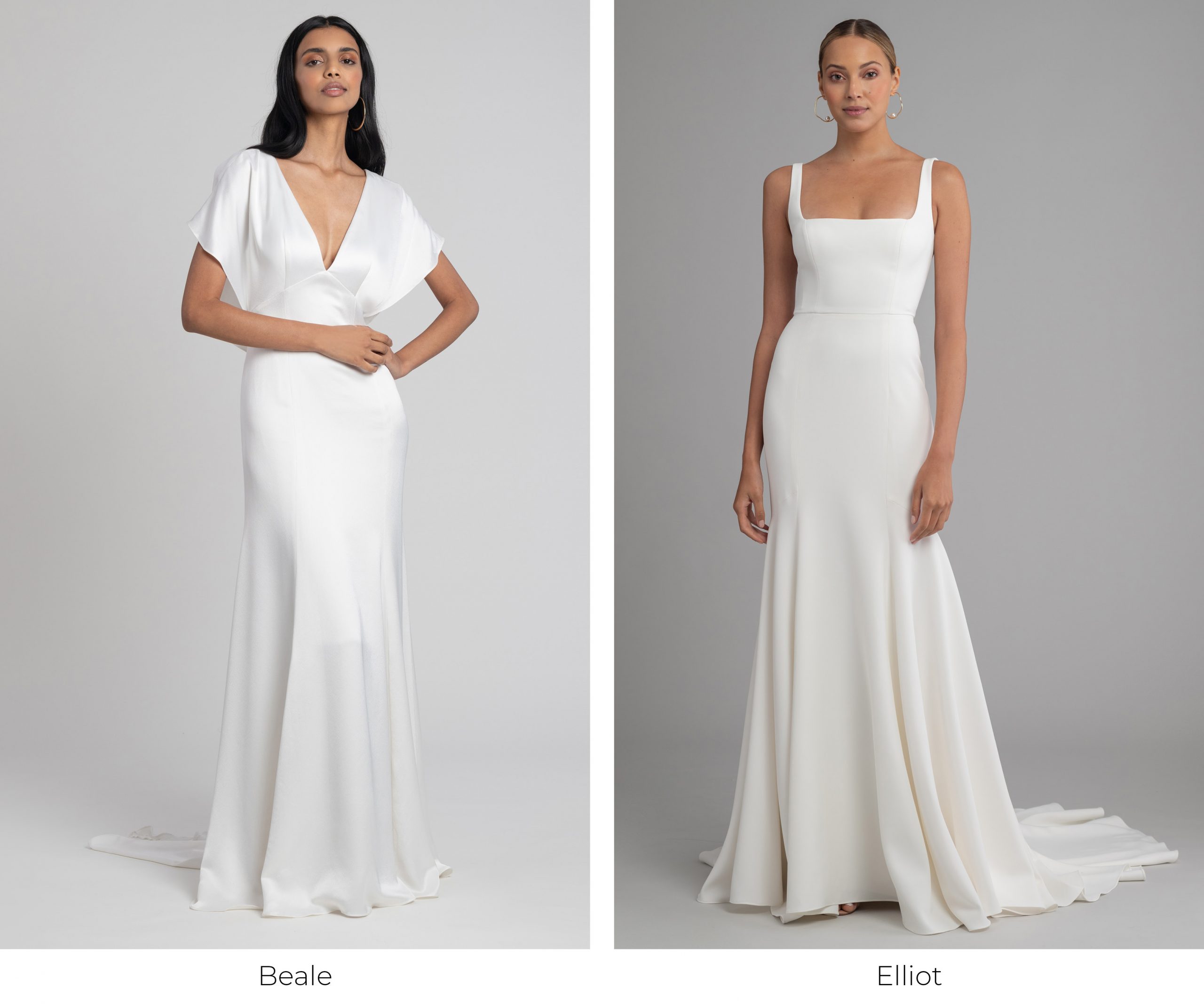
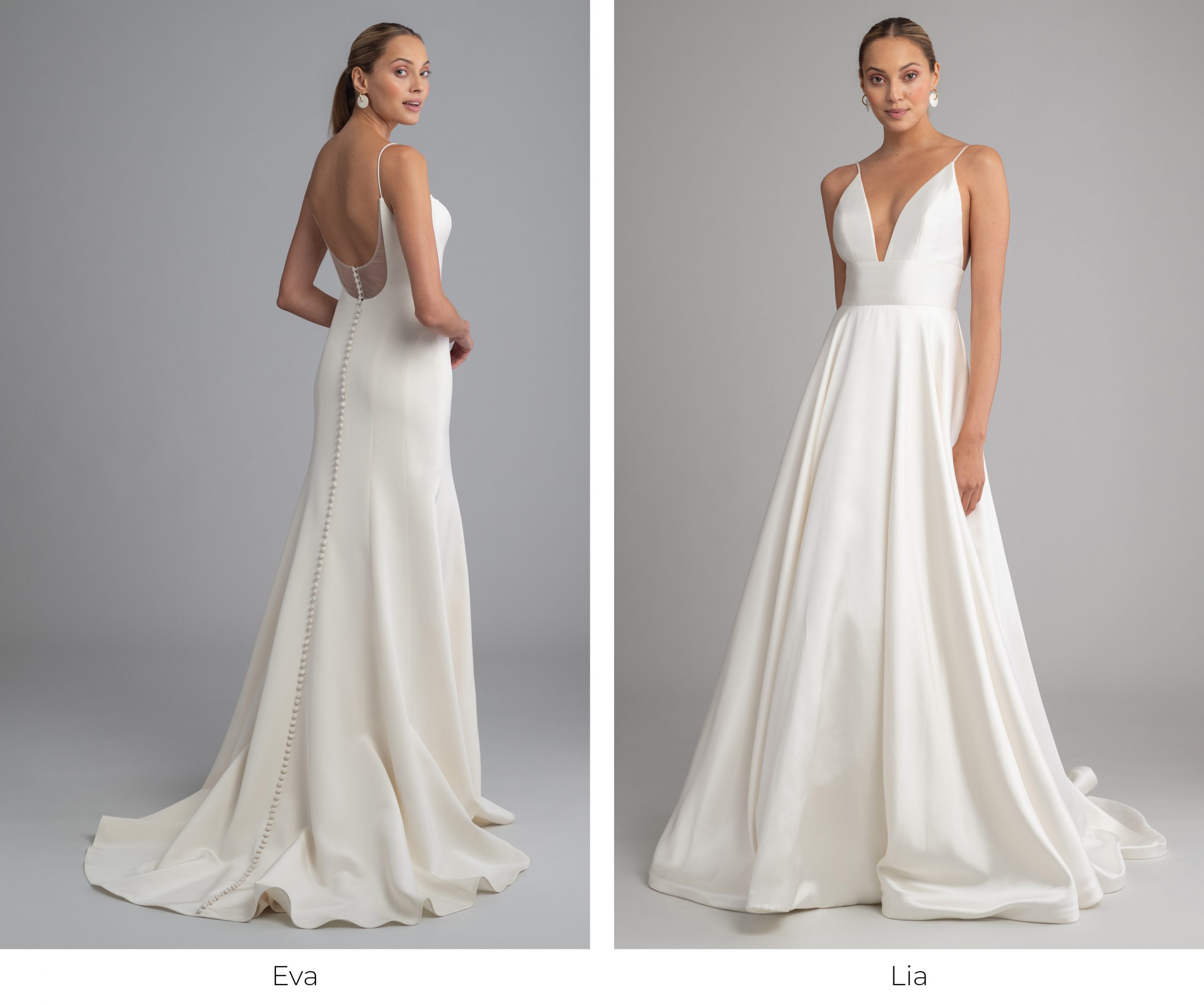
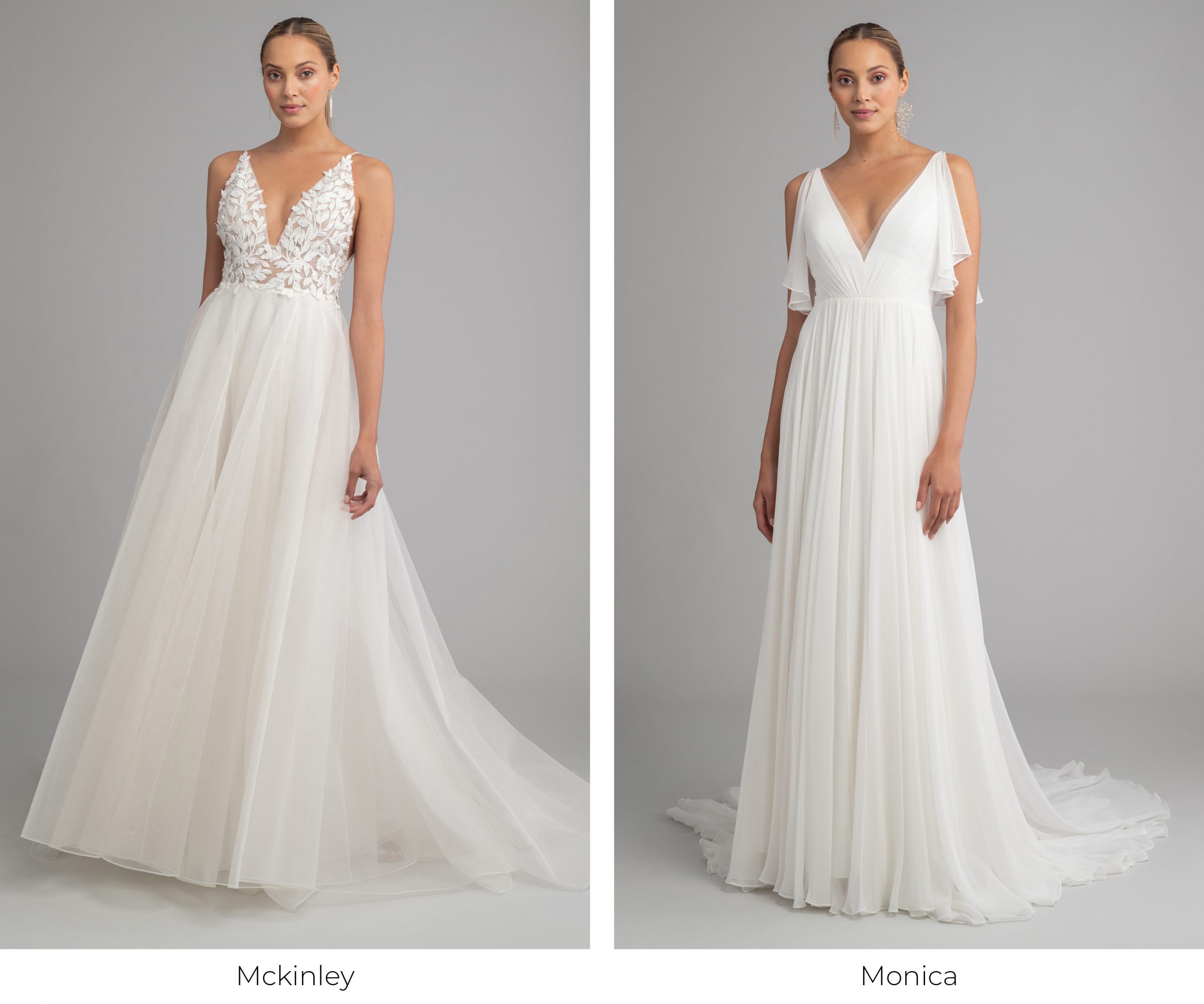
Fashion Feature: Truly Beloved
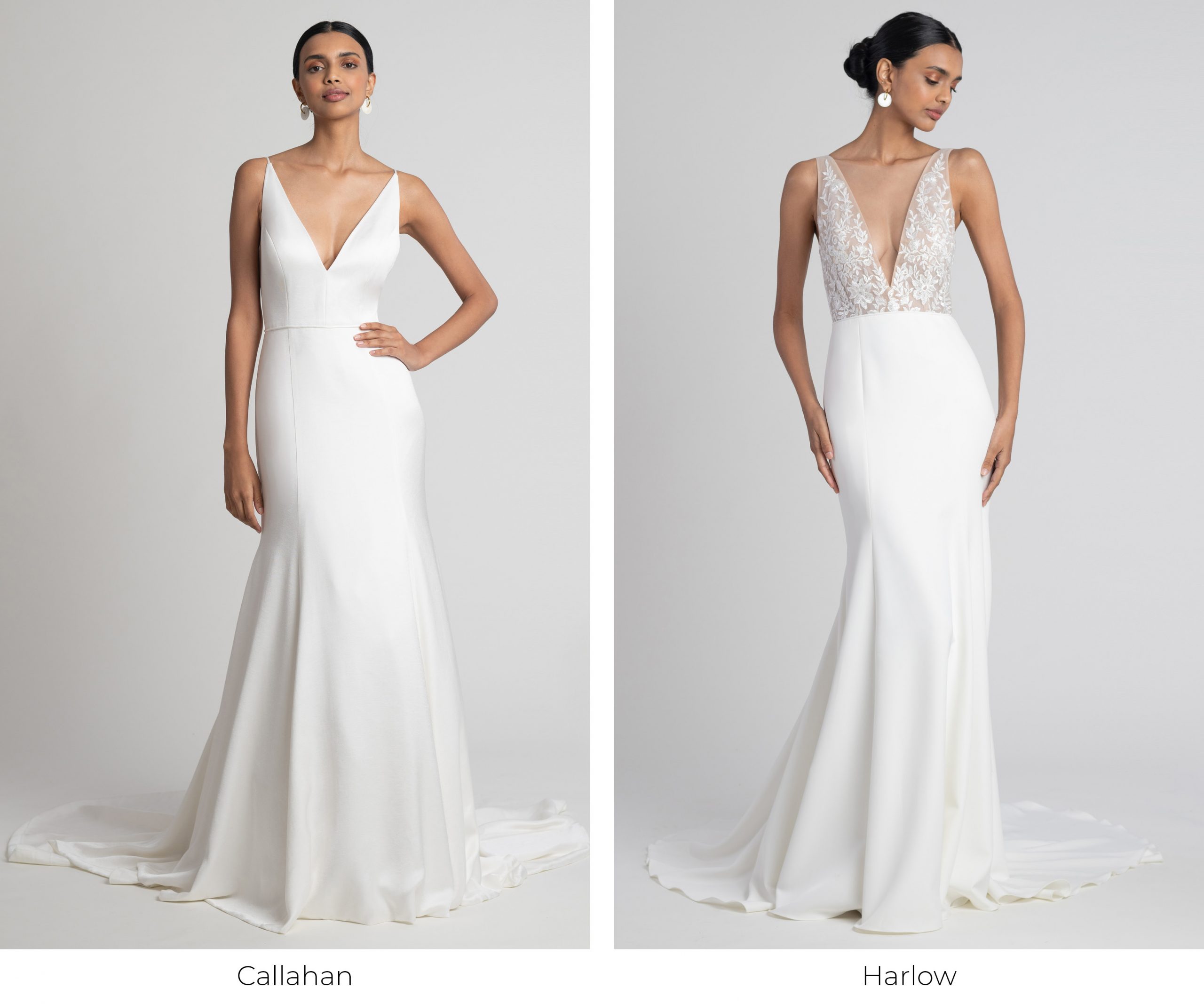
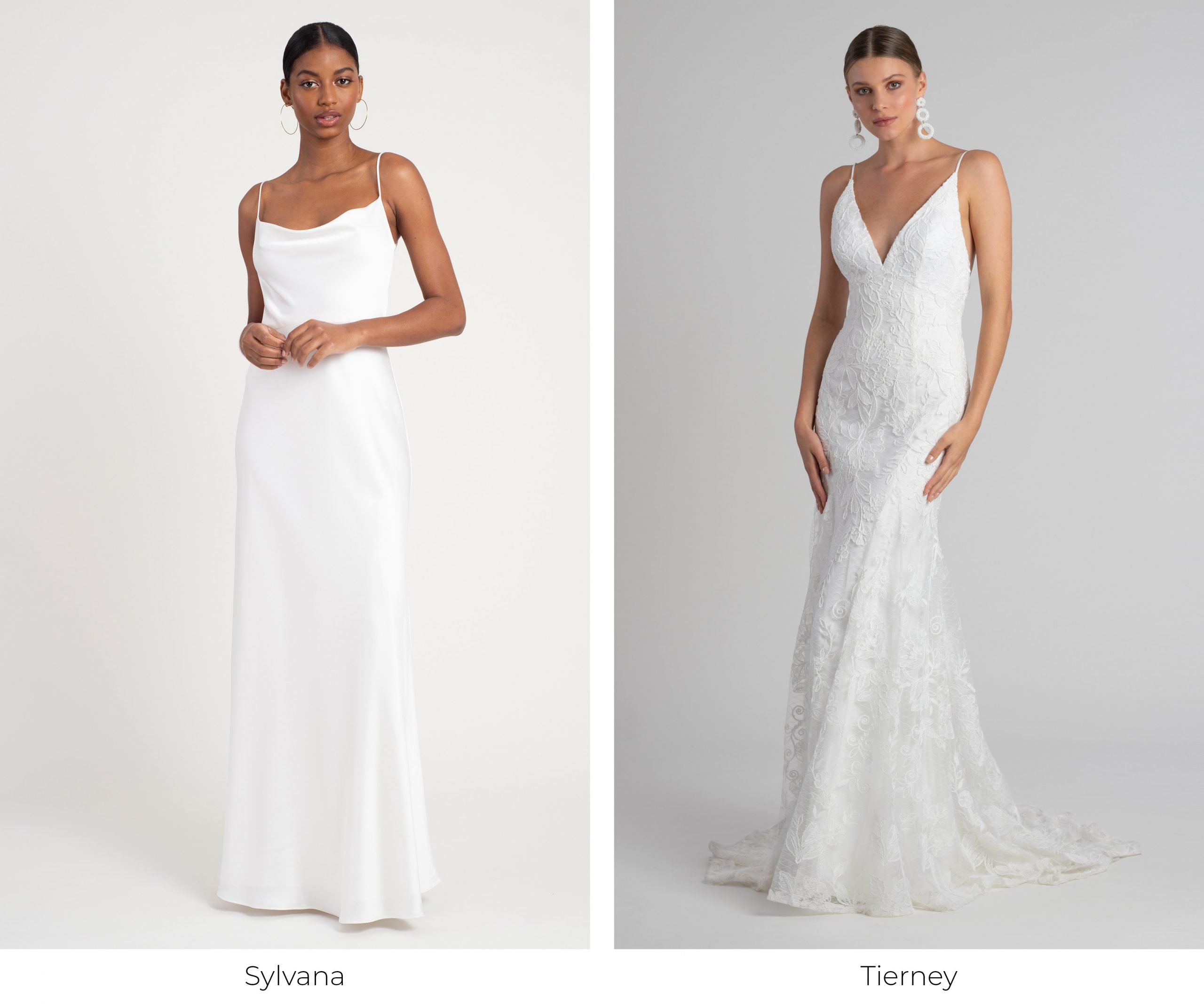
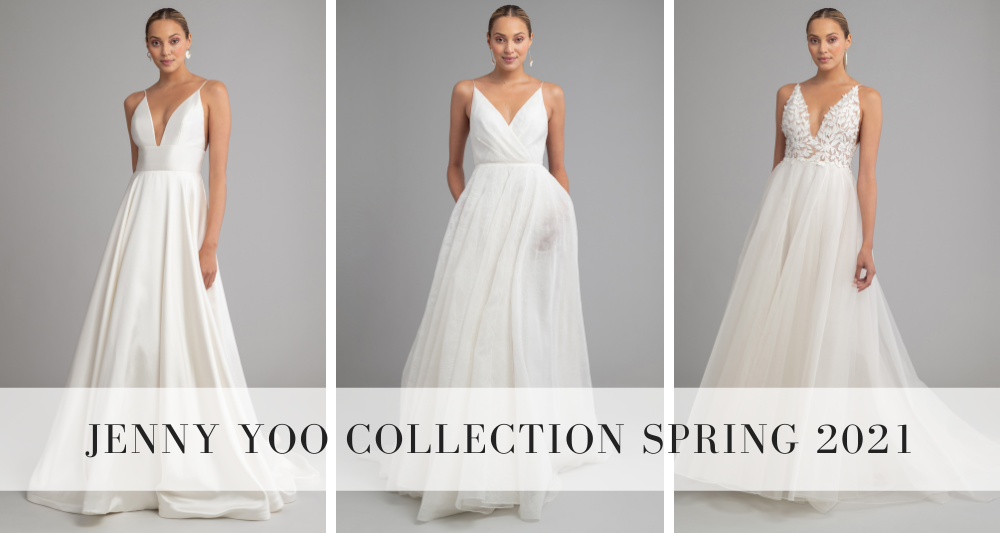
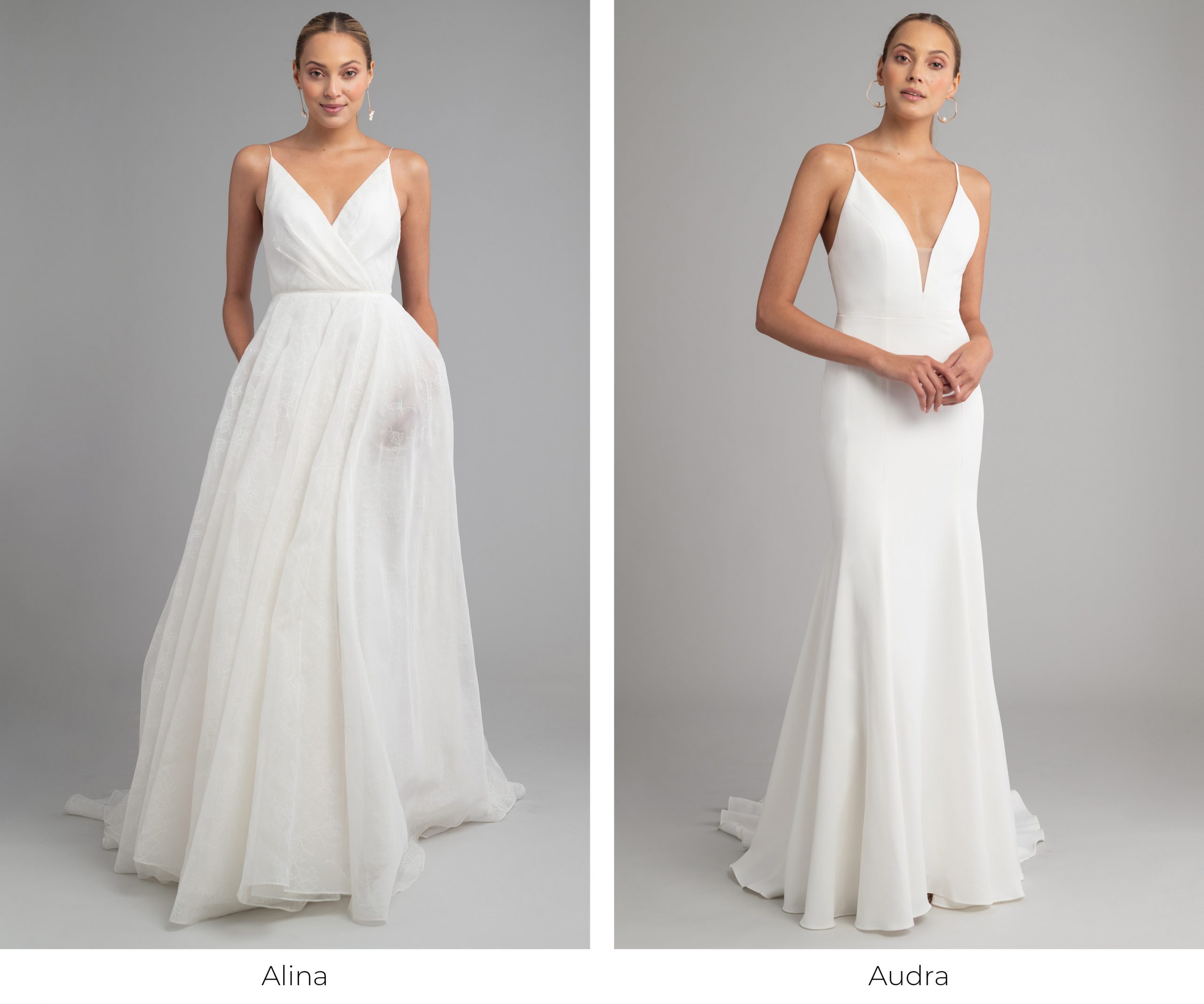
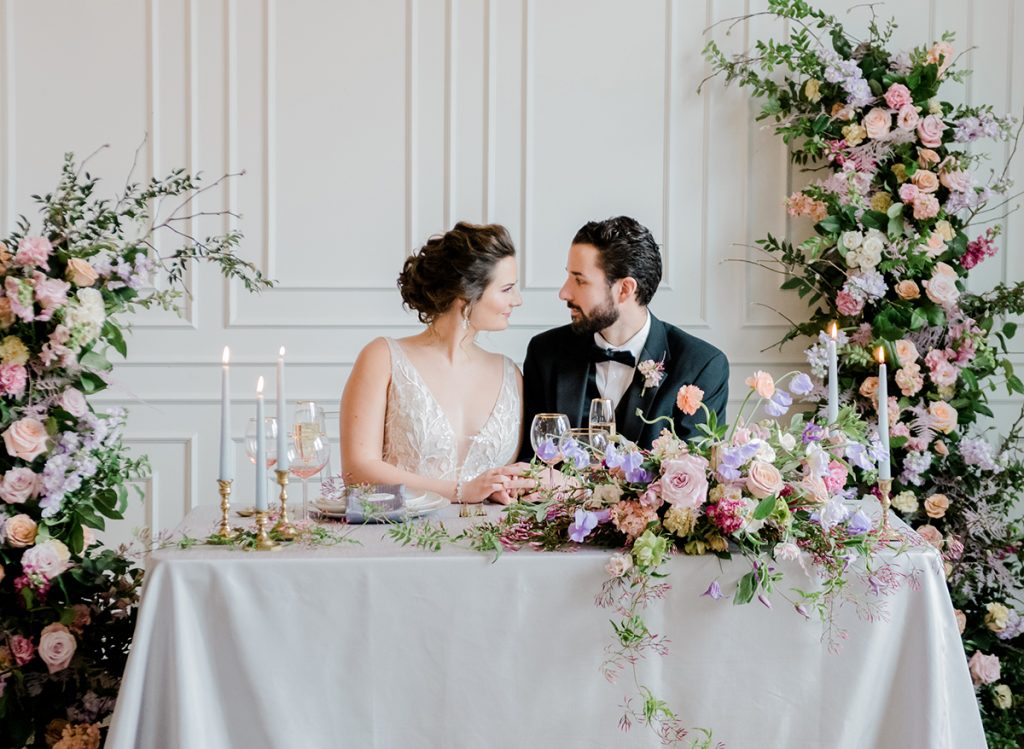
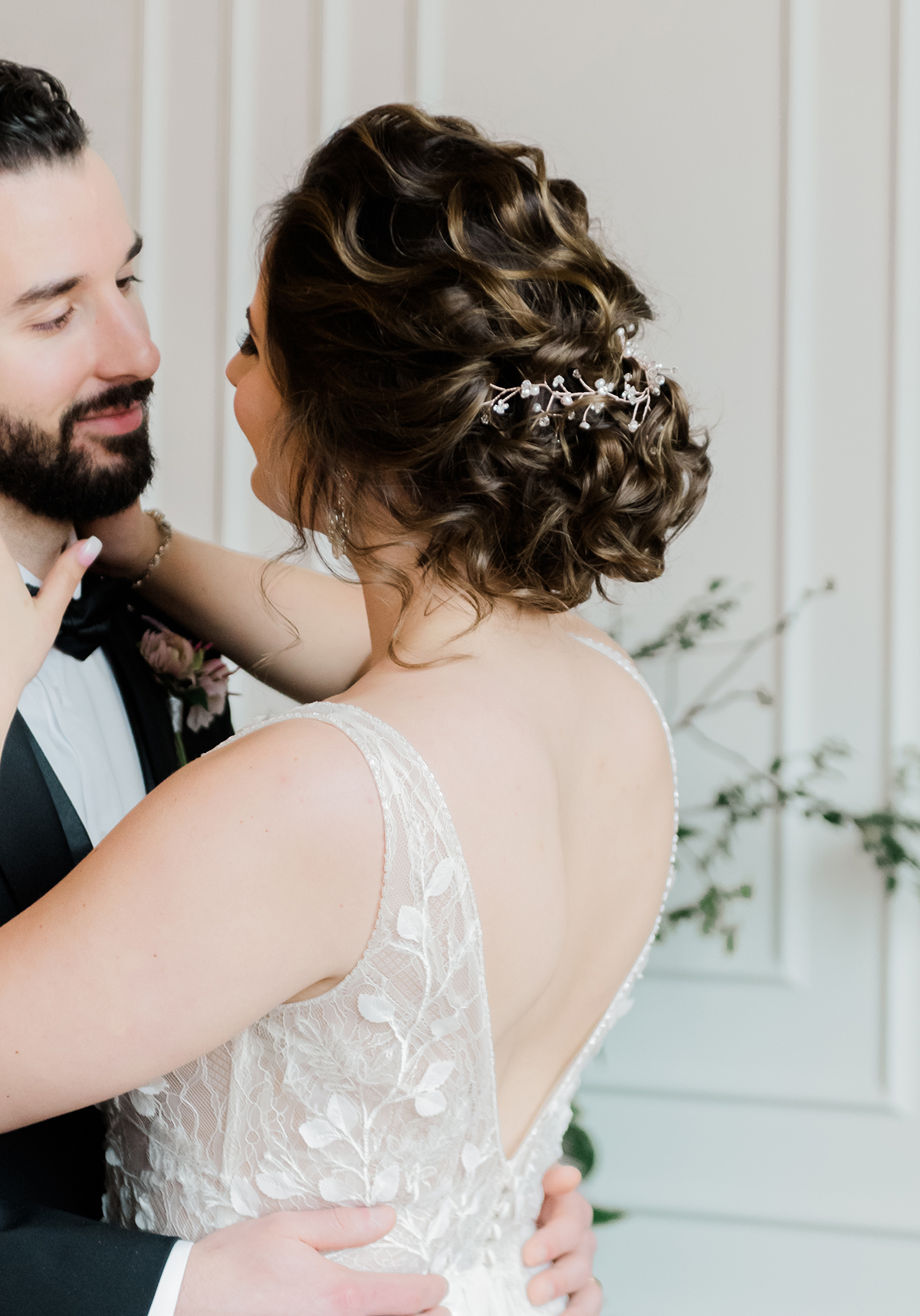
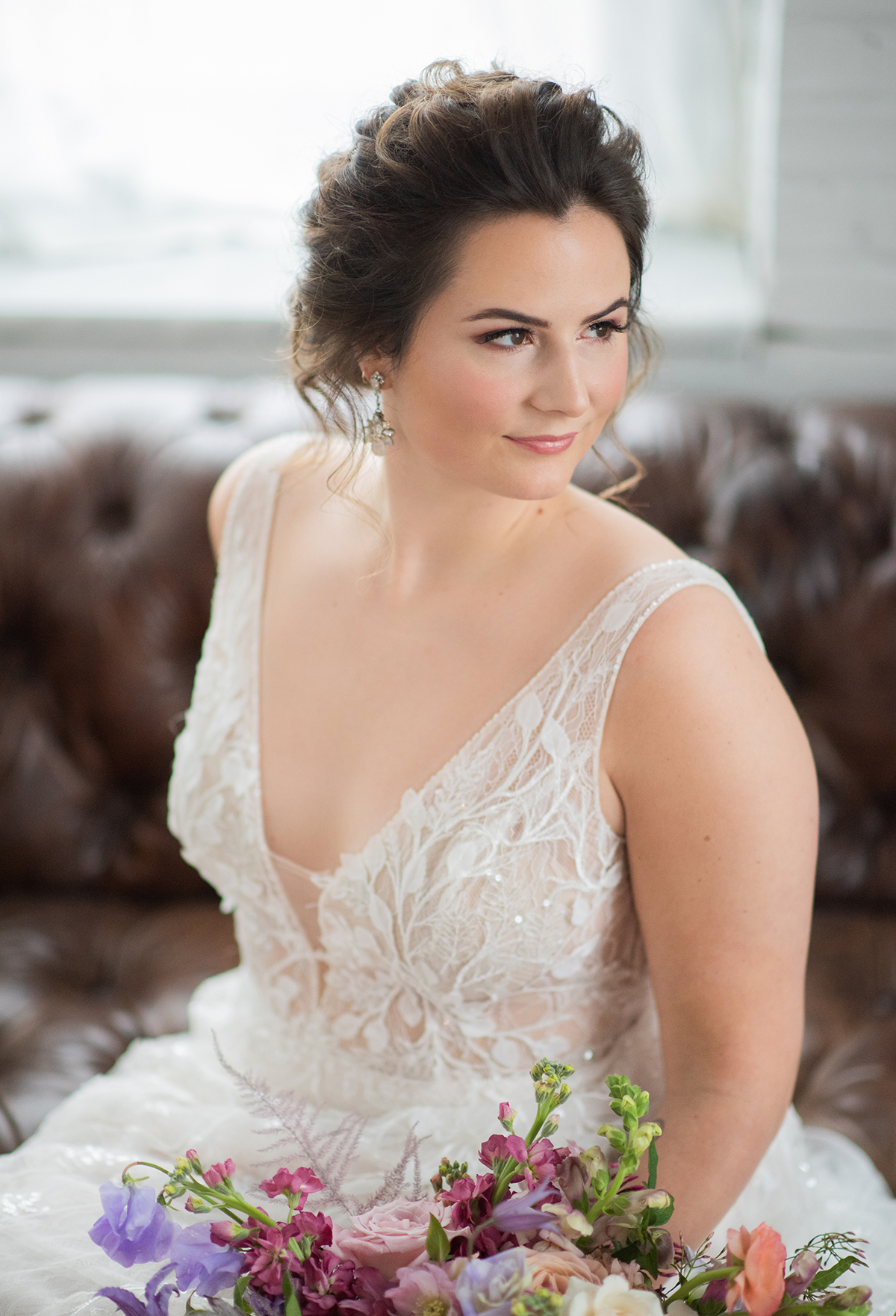
Bridal looks by Eva Lendel found at Eva’s Bridal International and Luxe Bridal Rack

Bridal looks by Eva Lendel found at Eva’s Bridal International and Luxe Bridal Rack

Written by Christina Oddo | Photography by Rachael Schirano Photography
Feeling a little overwhelmed planning your wedding day feast? Don’t panic! Once you learn a couple tricks of the trade and answer a few basic questions about your vision, your caterer will be able to help you craft the perfect meal for your perfect day while also infusing your personalities.
Before you even start thinking about what food to put on your menu, you need to figure out how your meal is going to be served. Food service sets the tone for the rest of the reception, so take the time to mull over the following options before you pick.
Full service is for couples who want the meal to be the star of the show. If you don’t mind dinner taking up a good part of your reception, having individual courses served directly to your guests is the way to go. It is also the safest way to go since it requires the least amount of handling (not to mention the handling is done by trained professionals).
Buffet is for couples who can’t wait to get dancing. Opting for a buffet-style dinner gives you enough time to enjoy your food and a few toasts, but also gets the party started sooner. Keep in mind that social distancing may be more difficult to enforce, and clear partitions may need to be used between food stations, depending on public health guidelines. Once dinner wraps up, everyone is free to hit the dance floor or go back for seconds.
A combo is for couples who want the best of both worlds. Have the main course served directly to each guest, but skip wait staff for dessert and have your guests serve themselves. This way, you get all the elegance of a full-service dinner plus the added expedience of a buffet.
Work with your caterer to create a menu that has meaning by taking some time to reflect on food before deciding what to serve. What are your favorite meals to cook together? What foods conjure up happy memories? Come up with a list of foods that not only taste great, but have meaning, then talk to your caterer about them.
However, keep in mind that you and your partner aren’t the only ones dining out on your wedding night. Beef tartare may be your soon-to-be spouse’s favorite meal, but not everyone is comfortable with uncooked meat. Avoid unnerving your guests by offering a variety of options that are delicious, but don’t feel outlandish to guests with less adventurous palates.
There’s no point in serving foods that have special meaning to you if your guests have no clue about the backstory! Work with your stationer to personalize the menu card by adding little notes about how ravioli was the first dinner you ever cooked together or how lobster bisque reminds you of summer trips to Maine. Using your menu to let your guests in on a few special moments from your relationship will make them feel even more connected to the wedding.
One of the most beautiful elements of marriage is its ability to unite people who come from different places and upbringings. This type of melding is definitely something to be celebrated, so whether you’re Hindu and marrying an Italian Catholic, or a Cubs fan tying the knot with a Sox fan, consider using your menu to showcase your unique blending of cultures. Serving foods from your various backgrounds side by side is a creative and touching way to signify how you and your partner came together to create a love that’s one of a kind.
Most couples are so distracted during their reception that they just pick at their food or forget to eat completely. Allow yourself to really enjoy the food you spent so much time selecting. Also remember that food is fuel. How are you going to tear up the dance floor on an empty stomach? Avoid burning out early by taking care of yourself and making the most of your dinner.
Planning a menu for a big group of people can be stressful. Our best piece of advice is to trust your caterers. Feeding crowds is what they do best, so once you communicate your vision, it’s OK to let your caterer take the reins. Relinquishing control may feel scary, but the end result is worth it — a room full of your favorite people enjoying an amazing meal.
Written by Kellee Grucci | Photography provided by Atlantis
Where you hold your wedding defines your day more than anything else. Your location sets the tone for the day and it says a lot about your personality as a couple. The sheer number of wedding venues, however, can make your head spin. City or country. Ballroom or barn. Indoors or outdoors. Library or loft. Park or lakeside. Many couples feel overwhelmed by so many possibilities. Where should you start?
Before you dive headfirst into looking at venues, you need to determine your budget and how many guests you plan to invite. This information can help you narrow down your choices. Another item to be mindful of is the distance your guests will need to travel between the ceremony location and the reception location if they are not being held at the same venue. Once you have those details nailed down, it’s time to start thinking about the type of venue for your big day.
If you are looking for a full-service, traditional location, hotels are a great option for almost any type of wedding celebration. A variety of hotels offer intimate nooks that can accommodate 20 guests, elegant ballrooms that can accommodate 400 guests as well as rooftop terraces boasting beautiful skyline views. You can have your ceremony on the rooftop and dance the night away in a ballroom full of expansive windows showcasing the beautiful city. Many hotels also offer all-inclusive wedding packages with in-house event specialists that can lead you through the entire planning process. Hotels are viewed as very versatile and can even host your rehearsal dinner on-site in their restaurant.
If you foresee inviting numerous out-of-town guests, holding your reception at a hotel can take the guesswork out of booking a room for their overnight stay. Some hotels can even supply a unique reservation link for your guests to book their rooms within a room block so that everyone will be placed near one another. As an added benefit, a hotel allows your guests the convenience of accessing their rooms throughout the celebration to change their high heels to flats, freshen up or easily get to their room safely if they have overindulged.
Country clubs, another classic venue, also offer may possibilities. You may think that you must be a member to rent their facilities, but country clubs are not as exclusive as many people think. Many country clubs are available to host events even if you are not a member. Similar to hotels, most country clubs offer many of the services you may need on site, such as an event planner, catering and a variety of linens.
Known for their golf courses and expansive grounds, country clubs are an ideal location for an outdoor event. Every savvy planner knows if you are planning an outdoor ceremony or reception, it is advisable to have a back-up plan in case of rain. Be sure to discuss your back up plan with your event coordinator ahead of time. Having the peace of mind that there is a space to move into if inclement weather strikes allows you to focus your thoughts on other things. Then there’s the golf! Your wedding party may enjoy playing 18 holes the morning of the ceremony or as a part of a pre-wedding celebration.
Browse Atlanta area country clubs here.
Another popular choice for wedding celebrations, banquet halls offer fantastic possibilities for your big day. Because large-scale events are their niche, you can expect that the banquet hall staff is well-versed in making any size event go off without a hitch. With their custom kitchens designed to prepare meals for large events, all- inclusive packages and dedicated event planners, you can rest assured that the staff will show meticulous care with every aspect of your wedding.
If you plan on an extensive guest list, don’t forget to discuss your audiovisual needs with the banquet hall’s event planner. From microphones for your toasts and speeches to projectors for your picture montage, a banquet hall offers optional features that are sure to enhance your reception.
Browse Atlanta area banquet halls here.
Planning a wedding can be stressful, so why not incorporate some well-deserved rest and relaxation into the equation? Holding your ceremony at a luxurious resort and spa may be just what you need. The final 48 hours leading up to your big day are likely to be a whirlwind of activity for you and your soon to be spouse. Be sure to take a moment to enjoy a little pampering at the spa.
Choosing a resort and spa as your wedding location can also take the guesswork out of how to fit in a trip to the salon to have that all important pre-wedding mani and pedi. And don’t forget about that massage. After the major undertaking of planning a wedding and making it to the finish line (aka the aisle), you deserve it!
Browse Atlanta area hotels and resorts here.
Botanic gardens and pristine parks have always been popular wedding locations. You are almost guaranteed amazing wedding photos among the blossoming flowers in the spring, the lush greenery of the summer months or the magnificent array of colorful leaves found in the fall. Moreover, many gardens and parks offer both outdoor and indoor options for your nuptials, giving you a built-in back-up plan. Keep in mind that these spaces tend to be public property, so you will likely need to adhere to a noise ordinance, obtain a permit and your event may not feel entirely private. Therefore, be prepared for unexpected onlookers and casual passersby.
Couples looking for the perfect setting to say “I do” are lucky to have ample choices when it comes to location types. Beyond all of the beautiful hotels, restaurants, museums and more that the city and surrounding areas have to offer, couples also have the option to host an event on the water with unobstructed views of the stunning skyline.
Envision cruising along as you and your guests sip champagne under the setting sun. Depending on the vessel you select, your guests may have the option to enjoy cocktail hour sitting on an open- air deck or in a climate-controlled salon. Either way, they’re sure to be treated to a fabulous meal, full-service bar and dancing the night away under the city stars with unparalleled views of the skyline.
If you would rather keep your feet firmly planted on dry land, numerous venues offer locations by the water. These boast spectacular water views at any time of the year. Whether the venue you choose has grand windows or a high- rise patio that overlooks the water, you can’t go wrong with this unique take on your special day.
Browse Atlanta area waterfront venues here.
If a picturesque setting is on your must- have list, then be sure to explore the many opulent mansions located throughout the area. Where else would you find cascading staircases, expansive grounds, exotic gardens, historical backdrops, romantic chandeliers and elegant architecture all in one place? Mansions also offer some of the same amenities as hotels and country clubs. Most are likely to offer packages including a dedicated wedding specialist, full- service caterer and private suites for you and your wedding party to prepare for the big day.
Many mansions offer a versatility that will enable you to fulfill your dreams for your wedding, whether you wish to hold only your ceremony or reception on the property or to use it for both.
Most mansions also offer both indoor and outdoor site options. Keep in mind that weather can change in an instant. Be sure to have an alternate location set up inside if you have decided on an outdoor wedding. Another bonus of having your wedding at a mansion is that they typically only host one event per day. This means you have the grounds to yourselves for pictures and the staff completely focuses on the needs of you and your party.
Browse Atlanta area historic venues here.
Atlanta offers many spectacular museums, art galleries and libraries to choose from. Although these locations may not be obvious choices for hosting a ceremony and reception, you should definitely consider them. These amazing buildings often feature exquisite art, unique architectural design, historical yet modern elegance and incredible natural light. These traits can make both your day and your pictures shine.
Getting married in a shabby chic barn or on a fabulous farm has grown in popularity over the years, and for good reason. Think rustic wood beams wrapped in twinkle lights, gorgeous landscapes with mature trees, a casual reception set around fire pits all while enjoying farm-to-table catering. Though these types of venues may not offer all-inclusive options, you can hire a wedding coordinator to assist you with all of the details. Plus, if you were planning to have your four-legged friend be a part of the big day, hosting your wedding in such a unique, animal friendly location means your pet could not only walk you down the aisle, but also join you at the head table.
Browse Atlanta area barn/farm venues here.
Throughout your wedding planning, you are likely to consider restaurants for your bridal shower, bachelorette party and rehearsal dinner, but many couples may not think of a restaurant for the wedding celebration itself. Here is some food for thought: A restaurant can be a great location if you desire a smaller, more intimate wedding. In fact, restaurants commonly have unique event rooms that can be reserved for private parties. Also, depending on the time of day — or even time of year — you may have the option to rent out the entire restaurant.
While any venue you choose will undoubtedly offer delicious meals, most large kitchens are set up for catering. This limits the meal options they can offer your guests. Restaurants often provide a greater variety of menu options. A restaurant may even give you the option of having your guests order off the regular menu for an extra special meal option.
Hosting your wedding at a restaurant may have some extra meaning as well. Pick a restaurant that is sentimental to you and your partner. Maybe you met your future spouse during your semester abroad in Italy. Or maybe your first date was in Chinatown. Consider hosting your wedding celebration at a restaurant that has special meaning for you as a couple. This ties your celebration to the many adventures that brought you together and will keep you close for years to come. What a special celebration that will be!
Browse Atlanta area restaurants here.
Today’s modern engaged couple may be looking for a location that is a little edgier or industrial. Lofts offer many benefits for your ceremony and reception needs. Many of these venues are converted mills, so they have expansive, wide-open spaces. Lofts are wide open spaces which can accommodate virtually anything you can imagine. A loft may easily accommodate all of your friends and family, plus a great dance floor. They are fully customizable, which requires a little extra effort, since you will bring in virtually every aspect of your wedding. Still, if you and your wedding planner are up to the task, a loft could be a great choice for you.
Though some lofts offer in-house catering, many do not. This provides you with the opportunity to select the caterer of your choice and have your wedding cake designed by your favorite bakery. As another benefit, lofts also provide unique photo opportunities. These wonderful spaces tend to have amazing steel beams, original wood or concrete floors, weathered brick walls and exposed ceilings. Work with your wedding coordinator and photographer to come up with some creative ideas to incorporate these urban features into your photographs.
Browse Atlanta area lofts here.
Even though the coronavirus cancelled many plans and events, it did not cancel love. For couples that refuse to let a little pandemic get in the way, they are choosing to tie the knot on a smaller scale. An intimate event complete with a mini-mony is all you need to announce your unending love. Nearly any location throughout our area will work, even your backyard! You can turn the location into your dream wedding, just on a smaller scale. And, although the guest list is small, your beautiful backyard wedding doesn’t have to be. Intimate weddings can be big on details, dishes and devotion, of course. Each element can be finer, tastier and decided upon with greater attention to detail. The term “small but mighty” comes to mind to best describe these trendy weddings.
While most couples opt for one of the more traditional wedding locations mentioned earlier, there are always going to be those adventurous duos who want to treat their guests to something a little more unique. Luckily, Atlanta can accommodate even the most eclectic desires. These couples may choose to say “I do” in a stunning wildlife habitat at a local zoo, standing on a glass ledge 1,300 feet above the city, on the playing field of a hometown sports stadium, on stage at an iconic theater or among the stars at the planetarium. Whatever you choose, the Southeast offers an almost endless list of venue options for your wedding. For your perfect day, there is no limit to what you might imagine.
Written by E. Ce Miller | Photography Ashley Gaminas Photography
Your honeymoon has the potential to be one of the most, if not the most, memorable trips of your life. Get inspired from the following adventures, and take the time to plan a getaway that appeals to both you and your spouse — a trip that will create special and unique experiences you will cherish forever.
Tropical, beachside honeymoons are always in style. It’s the ideal setting to unwind from the stress, soak up some sun and concentrate on one another. Mexico’s vast array of all-inclusive hotels offer great value. If you’re in the mood for something more exotic, Indonesia, Costa Rica, Greece or the Caribbean may be more your speed.
If you prefer to stay domestic, you can relax by the ocean at one of the many beautiful beaches and lovely hotels Florida and California have to offer. If you are bored by the beach, consider activities like whale watching (great in Los Cabos, Mexico) or swimming with wild dolphins (Oahu, Hawaii).
Hit the open road and feel the wind in your hair. You don’t have to travel much past your backyard to be adventurous stateside. Lace up your hiking boots, venture to any of our 62 national parks and explore miles of scenic trails. If you prefer lake views over ocean panoramas, the Midwest is not only a hidden treasure of Small Town USA resorts, boating and outdoor adventure, but also offers beautiful, rustic cabins, waterfalls and nature.
Or, if you like wine and picturesque landscapes, the West Coast is for you. California’s gorgeous Wine Country includes more than 800 wineries in the northern San Francisco Bay area, which covers both Napa Valley and Sonoma Valley. Book a comfortable stay at a nearby bed and breakfast after indulging in the offerings of one — or several — of the region’s wineries.
If it’s domestic culture you’re seeking, go eastbound to absorb the charms of our original 13 colonies and their historical cities, which are ripe with metropolitan life, upscale shopping, amazing seafood, museums and more. If you navigate further South, toward South Carolina and Florida, prepare to be inundated with majestic oaks, lush golf courses, sandy beaches and luxury amenities.
Get swept up in the history and old-world charm of Europe. You can’t go wrong with Paris, Rome, Venice or Prague, but there’s an abundance of hidden gems that also deserve some love. For the best of both worlds, try a river cruise that docks in large metropolis areas, while also letting you explore lesser known, but equally beautiful cities and towns.
Keep in mind, you don’t need money to make memories. If finances are an issue, plan a trip close to home. Spend a few days at a quaint, little inn or enjoy one of the many resort spas nearby. You have the rest of your lives to travel — what matters now is fully enjoying one another’s company.
Are you craving a long, traditional skirt, but want to spice it up with a little flirtation and fun? Tiers and ruffles can add movement and panache without weighing you down by achieving the volume of a princess gown, but without all of the extra material. Tiers are best paired with ballgown or A-line silhouettes, while ruffles look best with a full skirt or mermaid silhouette. No matter what you do, make sure to take an extra twirl on the dance floor. You owe it to the dress … and to your photographer.
GOWNS: Viktor & Rolf Mariage
It’s all in the details is spot on for this new trend walking down the aisle. While an open back is always beautiful, we love the idea of a design element trailing down your spine and elongating your figure. From illusion lace to jewelry and accessories, the trickle-down effect adds a sexy touch to your bridal look.
RIGHT Galia Lahav
Show the special men in your life you care enough to give them a bloom that won’t lose its blossom. Leather boutonnieres are a contemporary twist on the classic tradition. Pin this lovely leather beauty on the left lapel of all of the very important men in your lives to help them stand out on your big day.
Don’t give your spouse the cold shoulder. From the puffy sleeve to the poem sleeve, from satin to lace, statement arms hit the runway in a big way this year, often elaborating on and adding charm to contemporary, minimalist gowns. Pair it with a trendy one-shoulder neckline for an even more modern take.
Photography by Jasko Omerovic Photography
The city of Chicago is one of the most beautiful places to get married. Your photographer can create jaw-dropping imagery with the city’s gorgeous scenery and backgrounds. And as much as we love the classic wedding day photos, we also want to help you capture those unique settings that speak to you and your fiancé’s one-of-a-kind love. So, let’s create the perfect moment that will have your Instagram followers double-tapping every time.
Chicago may not be known for its beautiful nature-scapes, but hidden around our city are some extraordinary and lovely opportunities to incorporate Mother Nature. For instance, finding a hidden gem like Montrose Point Bird Sanctuary can transport you from Chicago’s busy streets to lush greenery and wildlife in the blink of an eye, all while keeping the Chicago skyline in the background. If you and your partner have a special connection to an outdoor location, make sure you snap a picture as a keepsake at that location. Not only does it make a great memory, but it can also help diversify the kinds of photos you decide to display in your album.
Lake Michigan creates a beautiful backdrop for any special pictures you have in mind for your big day. But don’t forget places like the Chicago River, with its many bridges, creating a wonderful opportunity to show off not only Chicago’s picturesque waterfronts, but also its gorgeous architecture within the same photograph. With so many access points throughout the city for these two bodies of water, it can seem like your pictures were worlds apart even though they were all within a few miles of each other.
While out and about in the city of Chicago, it’s hard to miss the colorful street art on bridges, stairwells and buildings. With so many pieces of unparalleled local street art on display, there’s sure to be a mural for every emotion and every couple!
A good place to start is with Logan Square’s “Greetings from Chicago” mural. Wall murals, along with the many interesting sculptures throughout the city, make it a breeze to add an artistic flair to your wedding photography. The infusion of color and excitement are sure to make photos that will be unique and totally original. Not only will they be cherished but they will also reflect your personality as a couple.
Adding an industrial ambiance to your pictures is among the easiest on this list. With so many iconic locations, such as right outside the Wrigley building, you can capture Chicago’s brilliant architecture while incorporating the Chicago River into the background. But if you are looking for something more rough-hewn, try using one of the many restored warehouses that are scattered throughout the city or areas below Chicago’s iconic L tracks.
Written by Kristen Castillo and Kelsey O’Shaughnessy-Podgorski | Photography by Carrie White Photography
Your wedding reception should be a well-timed event. From cocktail hour to dinner and dancing to cutting the cake, everything should run on a precise schedule, which means you need to know what to do and when to do it. This article will break down the reception basics and help you plan your party hour by hour.
Venue setup takes time and should be done well before the party starts. Your reception flowers and centerpieces should be in place at least an hour before the reception starts; the same goes for your wedding cake. Decorative elements like candles, chair covers and linens should be ready to go a day before the wedding. Banquet staff can arrange these elements for you. Then you and your planner can review the look and make any necessary changes the day of your wedding — or even after the rehearsal dinner if everything is in place. If you leave these details to the last minute, you’ll feel hurried and frustrated, especially if something doesn’t go as planned.
As with any event, you need to develop and write out a party plan. Make sure each person assigned to a job — from the bartender to the wait staff to the band leader — knows what’s expected of him or her. Write out the plan, review it with your vendors to foresee problems, and then test the plan with a dry run a week before the wedding or more. Part of this plan should involve having a backup in case something doesn’t go as expected.
Meet with your planner a few weeks prior to your big day, so you can map out the celebration hour by hour and area by area. You want to figure out where you and your spouse need to be at all times, plus review reception details like when dinner will be served and small nuances like which tables will get served first. If it helps you and the guests in your wedding party, type up an itinerary so everyone knows what to expect.
There’s a lot of fun to squeeze into a few hours, but that’s no reason to rush through your wedding reception. No one will have a good time if the event is too structured and everyone feels pressured to stay on schedule. Build some flexibility into your reception so you can let the good times happen naturally.
While you and your guests may want to boogie until the wee hours of the night, it’s not likely that your venue and catering staff feel the same. A typical wedding reception runs approximately five hours long and has a fairly structured schedule. Your band leader or DJ will serve as the master of ceremonies, or the MC, for the evening. He or she will keep your party moving along smoothly, so no one feels rushed and you don’t run into overtime fees.
Whether you’re looking at a mid- morning reception or an evening affair, here’s a general overview of how it can progress.
You said, “I do,” kissed and now it’s time for your guests to make their way to the reception. There may be some downtime between, but guests will generally arrive to a cocktail hour pretty quickly after the service. If the ceremony is held at the same venue as the reception, guests may simply venture to another part of the space to continue the festivities.
While the new couple, their attendants and their families are out taking glamour shots, it’s up to the MC to keep guests entertained. Light music in the background allows for socializing without that awkward silence. The MC can also advise guests to begin taking their seats about 10 or 15 minutes before the couple is scheduled to make their grand entrance.
After the MC guides guests to their seats, the band or DJ will change up the music to indicate that something big is about to happen. The MC will take the mic to start introducing the family and wedding party as they enter. The newlyweds will be announced last — to wild cheers from the crowd, of course. After this, the MC will request that guests take their seats.
This is a great opportunity to move right into your first dance. You have the spotlight, so you may as well use it! When the dance is over, the band or DJ will switch back to some pleasant background music to encourage chatter through dinner. Here’s your chance to start greeting your guests at each table.
A few minutes later, dinner will be served. At this point, take a break and grab a bite. You planned this meal for months! You deserve a few minutes to try it. Let the wedding party and family eat first — especially those who are making speeches. Toasts usually begin about 20 minutes after dinner is served.
Traditionally, toasts are started by the best man, followed by the maid of honor and then the parents’ speeches. If you and your new spouse would like to say a few words, this is a great time for that as well. Be sure to give your MC a list of everyone’s names so he or she can announce each person who will be speaking and their relationship to the couple. Bonus tip: Spelling the names out phonetically will drastically reduce the number of awkward pronunciations.
After the speeches wrap up, it’s time to hit the dance floor. If you decided not to do your first dance right after your grand entrance, now is the time. Typically, the father-daughter dance follows and then the mother-son dance. After that, your MC will invite guests to join the wedding party on the floor and the party starts.
Written by Emily Conley | Photography by Rachael Schirano Photography
There is no right way to plan a wedding. Seriously, the entire point of your big day is that it is a reflection of you, your partner and the love you share. While a traditional affair speaks to many couples, there’s no reason you can’t design a celebration that makes the two of you happy, no matter how quirky or outside the box it may seem.
We are seeing more and more couples opt for nontraditional wedding ceremonies, receptions or wedding day elements in an effort to personalize their celebration and truly showcase their personality as a couple. If you’re tempted to do something a little unexpected for your big day, we have some ideas (both big and small) for you right here.
Let’s start with perhaps the most dramatic nontraditional route you can take — eloping. Couples choose to elope for so many reasons and the popularity of this wedding day option is currently on the rise. Maybe you don’t want to spend your money on a typical wedding, or you can’t stand the thought of hundreds of eyes on you as you exchange your vows, or you want your wedding day to feel completely intimate and personal.
What’s great is there are no rules about how and why you decide to elope. Just like with planning a traditional wedding, you should choose what feels right for you and your partner. If you do decide to elope, there are dozens of ways to pull off this more intimate wedding day option. You can select a guest list of just you and your partner, parents and immediate family, or even add a small gathering of close friends.
Once you choose whom to include, you need to decide on a location. The courthouse is historically a popular option, and some cities and towns have city halls or courthouses with stunning architecture if that is important to you. You can also pick a location that is special to you and your partner — a rooftop where you had drinks on your first date, a waterfall you hiked to or a restaurant you both really love. There’s no need to travel to another city or country to pull off the perfect elopement, though that is always an option, too!
Couples who decide to elope should still consider including some elements of a more traditional wedding. At the very least, you should still hire a photographer to capture the event. You’ll want to have photos to share and look back on. You may also want to include a videographer if you want to share your special day with friends and family who may not be included in the event.
If you always dreamed of wearing a fancy white gown or a crisp tux, there’s no reason to not dress up just because you’re eloping. Go as fancy or as casual as you want! Other details you may want to consider include: a bouquet and boutonniere, a small wedding cake or sweet treat and a customized announcement to send out afterward. Some couples choose to celebrate with a small group of close loved ones after a private ceremony. Skipping the traditional big day does not mean you have to pass on everything — include the elements and traditions that feel right to you.
If a full-on elopement feels too dramatic, but you are still not digging the traditional wedding day experience, a destination wedding may be just the ticket. Destination weddings lend themselves to smaller affairs as you typically only ask your closest friends and family to spend the time and money required to travel. You may also choose this option for your big day if you want a more laidback, less formal vibe than a traditional wedding venue would provide. If you and your fiancé are from different states or countries, maybe a neutral location makes more sense so as not to unfairly burden one side of the family.
If you decide to host a destination wedding, consider sourcing some wedding vendors from your hometown and bring them with you. A hair and makeup artist who knows your hair and skin, and who can do a trial run with you before the wedding, is invaluable.
You may also want to consider hiring a photographer who is willing to travel with you. This affords you the opportunity to get to know one another during the engagement session, ensuring you feel more comfortable than you would if meeting someone on location the day of your wedding. You almost definitely need to buy your dress at home, well ahead of your wedding date, and be sure to talk to the boutique owner about any concerns with packaging your dress for shipping to your destination.
Benefits of a destination wedding are bountiful: gorgeous photos in exotic locations, a more intimate guest list, a relaxed party vibe and less stress if you book your wedding at a resort that offers a full-fledged wedding coordination package. However, a destination wedding doesn’t come without difficulties. Make sure you know exactly what the legal process is like for obtaining a marriage license if you are in another country, for instance. You may want to also consider staying for a night or two after your wedding, and then booking a separate honeymoon, so you aren’t surrounded by your wedding guests for the entirety of your newlywed vacation.
If you like to be in control of every single detail, a destination wedding could prove challenging, as you’ll likely have to leave a lot of the work up to the professionals on location and trust that it will be what you want when you arrive. If you are aware of these challenges ahead of time and tying the knot somewhere far from home sounds like your cup of tea, then a destination wedding may just be your dream come true.
For couples who want a more traditional wedding ceremony, but still want to customize their big day in a unique way, a nontraditional reception may be the perfect compromise. Instead of hosting an afternoon or evening reception like usual, couples could choose to have an early-morning ceremony followed by a brunch reception. Similarly, couples could choose to host a later ceremony with a cocktail reception to follow instead of a full dinner reception.
There are specific pros and cons to consider with these nontraditional reception options. A brunch reception is the perfect choice for the couple who wants to eat delicious food and spend time with their wedding guests, but doesn’t want a raucous party. Brunch doesn’t have to mean no alcohol (hello, mimosas and Bloody Marys!), but guests tend to be more subdued and less inclined to tear up the dance floor at 11 a.m. A brunch reception can be laidback or more formal, but you should generally stick with a semiformal dress code at most. An earlier celebration could also allow you to get into more popular venues that may be booked already.
With a cocktail reception, a couple foregoes a full dinner in favor of heavy hors d’oeuvres or passed appetizers. This type of reception can be held in the early afternoon or later evening. If you choose to host a cocktail reception during typical dinner hours (5 to 7 p.m.), you should let guests know on a details card or invitation, so they don’t expect a full dinner. Having food stations or passed apps instead of a plated meal can be a fun alternative to typical wedding food, giving you the opportunity to offer bite-size treats or unexpected fare like tacos or sliders. While some couples choose a cocktail reception as a way to save money, be aware that snack food costs can add up quickly and sometimes end up costing more than a regular dinner.
A cocktail reception is perfect for the couple who wants a less formal vibe. It’s generally easier to mix and mingle with guests when everyone isn’t seated at tables to eat. While standing cocktail tables are perfectly acceptable, make sure you do offer some seating options, especially for older guests and anyone whose feet are tired from standing in heels.
While some cultures throw multi-day wedding celebrations as per tradition, the Western or Christian wedding is typically a one-day affair. If you crave the intimacy of an elopement or destination wedding, but also want to celebrate with a larger group, a two- day wedding could be the answer. On the first day, exchange vows in a small ceremony with only your closest friends and family, and then follow up the next day with a larger reception to celebrate!
Or consider including all your guests in a weekend full of festivities. You could have a prewedding ceremony activity on Friday that incorporates a special interest that you and your partner share — kayaking, hiking, golfing, painting or ballroom dancing — and then have your wedding and reception on Saturday. By stretching your wedding celebration over several days, couples can personalize activities and share more time with their guests than just a few hours at a busy reception.
If you read through all of the alternative options above and none feel quite right, you may be interested in planning a more traditional wedding, while including a unique element or two. From wedding attendants to dessert, there are hundreds of ways to customize your wedding and add in a little unexpected flair. To customize your wedding ceremony, you can have a family member marry you for a personal touch. Some couples elect to have their grandmothers toss flowers in lieu of traditional flower girls, and the photos can be cherished for years. Want a unity symbol, but you’re not into the idea of lighting a candle? Switch it up and toast your new spouse with each other’s favorite beer or wine.
You can always use entertainment options to set your big day apart and leave your guests with an experience to remember. Hire a magician or tarot card reader to move between tables. A mariachi band could add a fun touch to cocktail hour. Enlist an Elvis impersonator to serenade guests at the reception or LED robots to spray guests with fog from the dance floor.
When it comes to food and beverages, a food truck reception instead of a typical plated meal or a beverage truck for specialty cocktails is a memorable option. Desserts are easily customizable, too, and there’s no need to even stick to sweets. Couples are opting to cut into things they love — pizza and cheese wheels are two popular choices — instead of traditional cakes. There’s also interactive s’mores bars, donut walls or French crêpes. You can always have a wedding cake and then bring in additional sweets to highlight your culture or favorite desserts.
Never forget that your wedding is a reflection of you and your partner. It’s important that you both feel like your big day is authentic and personal, even if that means flouting tradition or expectations. From solo elopements to an unexpected dessert, there are endless options for customizing your wedding. You just need to decide what feels right and follow your heart — especially if it leads to pizza at your reception, because who doesn’t love a little wedding pizza?


Whether you prefer a towering six-tier confection or a simple couple’s cake, your wedding dessert deserves to have your personal touch. Choose a style that matches your wedding theme and incorporates your favorite flavors. Even if the size of your guest list changes and you need to scale down, your cake designer can help you determine what works best to create a dessert that not only looks sensational, but tastes scrumptious, too!
Here are some of our favorites, which are sure to have your guests craving another slice.

LEFT: Toni Patisserie & Café | RIGHT: The Quintessential Cake

TOP LEFT: Creative Cakes Bakery | TOP RIGHT: Urban Icing | BOTTOM LEFT: Delish Cakes | BOTTOM RIGHT: Bittersweet
Written by E. Ce Miller | Photography Ashley Galminas Photography
Organizing wedding day transportation isn’t necessarily at the top of every engaged couple’s to-do list. But when the big day finally arrives, the last thing you want to be thinking about is how you and your entire wedding party are getting from the ceremony to the reception — and it’s not a detail you want to leave until the last minute.
The good news is that wedding day transportation doesn’t have to be all about the logistics of getting from Point A to B. With a little thought and advanced planning, you can schedule wedding day transportation that is not only functional, but also fun.
If you’re planning a sleek and sophisticated wedding, arranging a fleet of luxury cars or a stretch limo to transport you and your wedding party from the ceremony to the reception may be just the ticket. The tinted windows and bubbly make for a relaxing and refreshing ride, the kind of break you need between saying “I do” and dancing the night away.
If your wedding has more of a vintage feel, then consider arranging the service of an antique automobile company. For the car-loving couple, classic cars make for some one-of-a-kind wedding snapshots and a once-in-a-lifetime experience. Plus, lots of classic car rental companies have props on hand (think red carpets, roses and parasols) for couples who want their wedding transportation to double as a creative photo opp.
Wedding trolleys are fun, and if you’re trying to transport a lot of your guests at once (or have a lot of folks in the wedding party), a trolley may be the way to go. There’s plenty of space to start the party a little early — so be sure you have a couple bottles of champagne and your dancing shoes on hand.
Do you and your fiancé love riding motorcycles? Was your first date a tandem bike ride? Did you meet when he spilled coffee on you while riding the Red Line? Consider incorporating something unique and representative of the two of you into your wedding day transportation.
If your vendors allow, be sure to bring plenty of champagne, a playlist of your favorite tunes and anything else to make your journey from ceremony to reception a blast.
Written by Micaela Fischer | Photography by Cinder and Vinegar Photography
If you’re still buzzing from your engagement high, there’s a good chance you have not given your wedding stationery a great deal of thought yet. Sure, you know the invitations have to go out at some point. But that should be easy enough. After all, your guests just need to know the when and where of your big day, right? If only it were that simple. Believe it or not, there’s more to wedding stationery than just slapping some information on your save-the-dates.
It’s time to demystify this crucial component of your wedding planning so that you are set up for success from the moment you put your first stamp on your save-the-dates until you sign the last of your thank-you notes.
Why put so much time and effort into your wedding stationery? For starters, it’s a precious memento you’re likely to keep for the rest of your married life. Plus, it is usually the first major completed milestone in your planning process, as well as one of the last remaining souvenirs after the dust from your wedding finally settles. You want your invitations to be a true reflection of your personalities and set the tone for your wedding celebration.
Furthermore, your invitation suite is the very first element of your wedding that your guests experience. You want to make a good impression. From the moment they open the envelope, your guests are already forming ideas about what your wedding may be like. In other words, your guests take a lot of cues from the kind of stationery you send them.
Stylized script with a sophisticated flourish? They are bound to think formal. Distressed paper with floral prints and twine? Probably going to guess shabby chic. Your stationery can help clue your guests in about what they should wear and even their gift choice. Let the colors and themes of your wedding help guide your design.
Start thinking about how big your guest list is going to be to get an idea of how much stationery you may realistically need. But remember, the number of invites you send out is not equal to the number on your guest list. If you’re inviting 150 guests, you do not need 150 invitations. You probably have a great deal of families and couples that only need one invitation per household.
Also keep in mind, however, that it’s a good idea to have at least five to 10 extra invitations on standby. You never know when you may wake up one night in a cold sweat with the sinking realization that you completely forgot to invite dear Aunt Martha up in Minnesota. If such an occasion arises, those extra invitations are going to be a lifesaver and can help you avoid the unnecessary costs associated with multiple invitation orders. But apart from any last-minute stragglers, you also want to make sure you have a few copies of your stationery suite to save for yourself. When your wedding day finally arrives, don’t forget to grab one to be photographed at your venue!
While you may be chomping at the bit to get your stationery suite underway, you’re probably wondering when exactly you should get the ball rolling. Traditionally, save-the-dates are sent out eight to 12 months before the wedding date. Don’t send save-the- dates to guests unless you are certain fthat you are inviting them to your wedding. Your more formal invitations are typically mailed about eight to 10 weeks before the wedding — but this is not a hard and fast rule. If you are planning on having a destination affair, for example, informing your guests earlier is always appreciated so that appropriate travel arrangements can be made.
Consult your vendors to see when they need a final head count and then tack on a few extra weeks to give yourself some leeway. As much as we would all love for people to RSVP on time, chances are you’re going to have to do some last-minute follow up with some of your less punctual guests. When you finally send out your invitations, consider any elections or holidays that may slow down delivery. You may have to bump back your mail- out date to make sure your invitations arrive on time. The same applies to guests who live abroad.
Today, it’s rare to find a couple who has a complete list of contact information and addresses for their entire family and friend group. To ensure you’re ready to go when it’s time to send the save-the- dates, make sure to start gathering information early. Your parents and grandparents can be great resources when collecting names and addresses. And don’t be afraid to give someone a call to make sure you have the proper address. It saves time in the long run by preventing you from getting the ever-dreaded returned invitation with little time to get the address right before your wedding.
The shining star of your wedding stationery, the invitation suite is a package that includes the design of your invitations, as well as all of the little details that make them uniquely beautiful (every tie, every ribbon and every stroke of the fountain pen). Your invitation suite includes an outer envelope, many times an unsealed inner envelope, the invitation, a details card, a response card and a response card envelope. Additional materials like printed maps, menu cards and hotel information can also be included in your suite.
It can be a bit overwhelming, so let’s break down the basics:
When placing the invitation suite into the main envelope, all elements should be on top of one another according to size, with the smallest pieces in the front and the largest pieces in the back. Slide everything into the envelope with all text facing upward so that when recipients open your invitation, they are able to read it with ease.
Once your invitation suite is ready to drop in the mail, take a sample invitation to your local post office to verify if additional postage is required prior to mailing them out. Depending on the size, shape and weight of your invitation, additional postage may be required. The last thing you want is to come home to a mailbox full of returned invitations since you didn’t include enough postage.
After your invitations are sent, there are a few other elements you may want to think about to round out your wedding stationery. These elements include your ceremony programs, table cards, seating chart, menus, favor tags, as well as your thank-you notes. Work with your stationer to keep your overall look and design consistent throughout your big day.
If you find yourself needing to postpone your wedding due to the uncertainty surrounding a public health crisis or another unexpected emergency, don’t fret! You can handle this hiccup with determination and grace.
It is now commonplace to either issue a new save-the-date if you haven’t already sent out your formal suite of invitations, or send out an updated postcard or invitation with a new date if you have sent out your formal invitation suite. Make sure to have open communication and let your guests know as soon as possible if the date is changing.
On the updated invitation, it is also a good idea to direct guests to your wedding website in case there are further adjustments. Situations can change in an instant and you may find that your postponement turns into a smaller celebration than you originally anticipated. It never hurts to follow up with a courtesy call as well, especially if the timing of the postponement or change is getting uncomfortably close to your original date.
Although it may seem like a tedious task, it’s incredibly important to send a thank-you note to all of your guests no more than three months after your celebration. These should be personalized, handwritten notes to show your love and appreciation for everyone who made your wedding such a special event. Take this time to thank everyone individually not only for their kind gifts, but also for all of the amazing memories they helped you make. Don’t forget to send thank-you notes to your vendors as well! After all, they were instrumental in making sure your wedding day was perfect, too.
Hand-writing every single thank- you note may sound like an endless endeavor, but it doesn’t have to be distressing. Try carving out a time each week after your wedding when you can get a handful of them completed. Writing them in increments is much easier than trying to get them done in one fell swoop. You may even turn an otherwise dull job into a sweet activity to do with your new spouse over Saturday morning coffee.
While there is a lot involved in creating your wedding stationery, the process doesn’t have to be overwhelming. Find a professional stationer who can give you the customized invitation suite you envision. He or she can guide you through the process from concept to delivery. Set yourself up for success by getting a head start and taking things one step at a time, and you will be sure to get your guests’ seal of approval.
Before heading to the mailbox, read these helpful tips to avoid any costly missteps with your wedding stationery.
INVITATION SUITE
Not every couple opts to include all of these items, but this comprehensive list gives you a place to start. Add ribbon, wax seals and other details for a finishing touch.
DAY-OF WEDDING STATIONERY
Work with your stationer to create on-brand material for a cohesive look throughout your wedding.
Written by Christina Oddo & Yanira Garza | Photography by Ashley Galminas Photography
The flower arrangements are full, fresh and overwhelmingly gorgeous. The band sounds heavenly. And the groom, handsome as ever, awaits his bride. Yet as she heads down the aisle, something seems slightly off…
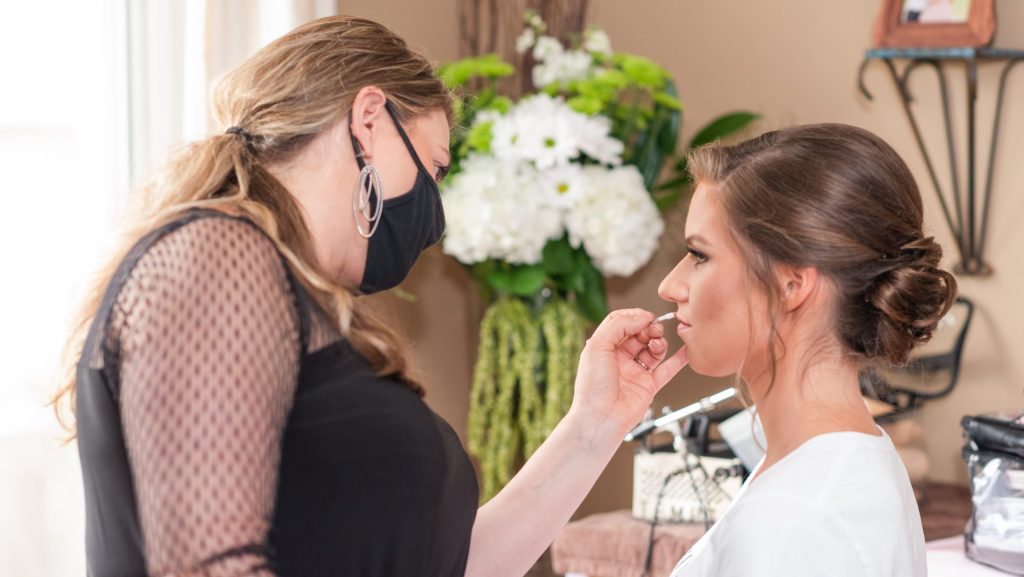
Hair and makeup are a critical part of your bridal look, but countless brides make the mistake of waiting until it’s too late to test out their desired style. The result of skipping your beauty trials? Unexpected fashion disasters. Whether it’s your bright red lipstick looking more cartoonish than sultry or your towering updo getting mistaken for a bobby pin arts-and- crafts project gone wrong, almost all beauty disasters can be avoided by scheduling a hair and makeup trial three to six months before your wedding. In addition to acting as an interview for your glam squad, trials are a chance for both you and your beauty professionals to work out any kinks before the big day arrives. Still not convinced? Read on to learn more about beauty trials and how they’re essential to perfecting your wedding day look.
You found what you think may be the perfect salon; now it’s time to book a hair and makeup trial appointment.
You wouldn’t head out on a road trip without making sure that your car was good to go, right? Believe it or not, the same logic applies to your wedding hair and makeup. No matter how many inspiration images you show up with on the morning of your wedding, the only way to guarantee you get that perfect Adriana Lima smoky eye (and that you like the way it looks on you) is to test it out way ahead of time.
All reputable beauty stylists should be more than happy to set up a trial or consultation prior to your wedding day. After all, some wedding styles can get really complicated, especially if you want an updo complete with braids, curls or bobby pins galore. In addition to it being proper industry practice, trials actually take a load of stress off your stylists as well. By meeting with brides ahead of time, stylists are able to come up with a look that they know is doable and that you know you love. If you’re working with professionals, your beauty trials should be a fun and informative experience that gets you all the more excited for your wedding day.
All hair and makeup trials are slightly different because no two stylists are alike, but there are a few rules that ring true across the board. When it comes to scheduling, give your stylists ample time to test out multiple looks, and block out about one or two hours for the trial. Another important step is to come to the appointment with ideas, but try not to overwhelm your stylists. Bring a few inspiration images for both hair and makeup, but don’t show up with an entire scrapbook of looks. Limit yourself to a few favorites and let your stylists take the lead from there.
If you book a makeup trial, arrive with a fresh, clean face. Put on a little moisturizer if it’s part of your routine, but don’t coat your face in anything heavy or oily. It’s also a great idea to bring some of your beauty staples along with you in a small toiletry bag, especially if you have sensitive skin and are worried about the stylist using new products on you. In addition to giving your stylist a better idea of what your makeup must-haves are, asking him or her to incorporate a few items from your personal stash can give you that extra level of comfort.
If the trial is with a hair stylist, resist the urge to show up to the appointment with squeaky clean locks. Hair styling actually works best on day-old hair, so stay away from shampoo (yes, even dry shampoo) and other sprays the day of your trial. Then again, although most stylists recommend that you come with day-old hair, some prefer to work with clean hair. Make sure to ask your stylist’s preference a few days before your appointment.
Do you have a beautiful hair piece or veil you want to incorporate into your look? Bring any and all crowns, fascinators, veils and other wedding hair accessories you’re considering along to your trial. The morning of your wedding is not the time for your stylist to figure out how to secure your pearl tiara, so make life easier on both of you by giving your stylist a chance to play around with your accessories well before the big day.
If you’ve ever wanted to experiment with a certain makeup look or hairstyle, consider testing it out during your trial. Now is the time to play around with false lashes, hair extensions and other beauty boosters you may have been too shy to try out in the past. Keep in mind that one of the most important parts of stepping outside of your comfort zone is being able to speak up and be honest. If you hate the way false lashes look on you, politely tell your stylist that you aren’t so crazy about them after all. A professional doesn’t get upset or offended. Instead, he or she is going to see your honesty as a sign of trust, not a knock on talent. Good beauty stylists care about perfecting your bridal look just as much as you do. Both of you want to make sure you feel confident and beautiful on your wedding day. The only way you’re both going to achieve that goal is if you’re open to new ideas, but also comfortable giving honest feedback.
Not 100% satisfied with your look post- consultation? It’s time to walk away. It’s not always easy, but think of it this way: If you aren’t totally in love with your look on your wedding day, you can’t reschedule the wedding and try again on a different day. The good news, though, is more often than not, most brides find themselves content with how their trial went.
If you fall into this happy category, but want to give your stylists the chance to work with you a few more times before the wedding, consider having them do your hair and makeup for your engagement shoot, bridal showers, bach party or other wedding events. The more your stylists understand your hair and skin, the happier you’re going to be with the way your wedding day look turns out. Whether you’re using your tried and true hairdresser, or you’re testing out a brand-new stylist, giving him or her the chance to work with you prior to your wedding day is essential. No matter how well you think the stylists know you or how highly your friends recommended them, it’s critical that you build a relationship with your stylists and ensure that they’re the perfect fit for your wedding day.
Written by Stephanie Jewell | Photography by Rachael Schirano Photography
Believe it or not, your choice of flowers may be one of the most impactful aspects of your wedding décor. Flowers have the power to really set the mood and evoke a magical atmosphere. The bridal bouquet is the floral element that everyone is sure to notice — the guests are going to be giving you all of their attention as you walk down the aisle and your bouquet is going to be right there with you, front and center.
Thinking through your bridal bouquet can be a great way to begin the process of determining your overall floral design. But it’s not as simple as just picking out a few kinds of flowers you like and leaving it at that. Did you know that there are several different shapes for bouquets? Are you thinking about any extras you may want to incorporate into your floral arrangements? Do you know which members of your wedding party get flowers? Your florist can walk you through all of these details, but coming in with a few ideas of what you may want is always helpful.
First things first — what style of bouquet do you want? Your florist may tell you that there are many ways to customize your bouquet to your style and shape is one of them. Ask to see examples of different kinds of bouquets and look at plenty of pictures ahead of time to get to know your preferences. Bring several photos to your floral appointment. You may not know the name of every flower or arrangement technique, but a picture is worth a thousand words!
If you’re looking for a larger bouquet, there are several options to consider. For a dramatic look, choose the cascading style, which includes longer flowers and greenery spilling out and down from the center to create a voluminous waterfall effect. Another related style is the pageant (sometimes called presentation) style, which features long-stemmed flowers gathered together, meant to rest in the crook of your arm. You can also opt for the hand- tied style, which features a mix of flowers and greenery loosely tied together with a visible ribbon or twine, achieving an organic “freshly picked” boho look.
For the classic bride, the round shape is timeless, featuring one or two types of flowers gathered in an arrangement that looks good from any angle, with stems wrapped completely in ribbon or with other adornments. Brides wanting a smaller bouquet can opt for the nosegay or posy style, which tends to feature just one or two types of flowers in a small rounded bundle that can easily be held in one hand. This look is popular for bridesmaids, leaving one hand free so they can help the bride with anything and everything in a pinch!
Shape is not the only physical element you have to take into account when thinking about your bouquet. You also have to pay attention to how big the bouquet is in relation to your body. For taller brides, the sky’s the limit — go for a cascading look or an overflowing bundle if you want. For shorter brides, it’s best to go for a smaller look. You don’t want your flowers to overshadow your face or cover up a large portion of your dress!
Your bouquet never stands alone — it is always seen with your wedding gown as a backdrop. Because of this, it’s important to match your bouquet to the style of your dress. If you are wearing a more ornate dress, full of beading or intricately patterned lace, think about choosing a simpler bouquet so that your dress takes the spotlight. This may mean that you choose one color for the flowers or use fewer blooms. With a more modern, simple gown, you can either match the minimalistic look with a simple bouquet or you can go a bit more dramatic with the flowers. If you’d like the bouquet to take center stage, go ahead and mix many different kinds of flowers or use several colors together.
When you meet with your florist, be sure to bring along fabric swatches or detailed photos from your dress and your bridesmaids’ dresses. That way, he or she can see the exact color palette. For instance, your florist may use a different shade of flower to match a champagne- colored dress than he or she would for a bright white dress. And a pink bridesmaid dress may mean something quite different to you than to your florist.
Besides matching your general aesthetic, you want your flowers to make sense given your venue and the time of day you’re holding your wedding. An outdoor daytime wedding is perfect for bright and sunny blooms like sunflowers, tulips and peonies. The sunlight and open spaces allow those flowers to shine!
In contrast, if you’re having an evening wedding indoors, you need to keep in mind how your bouquet may look under the venue’s lighting and alongside the interior décor of the space. Does the lighting in your tall and spacious church allow all the details in your bouquet to be noticed? Is there colored carpet, tile or draping in your hotel ballroom? All your wedding plans should intertwine in some way or another. While you don’t need to necessarily match your flowers to the design elements of your space, it’s good to be mindful of them so they don’t clash with each other.
No matter what aesthetic you are going for, the time of year that your celebrations occur play a huge part in your flower choices. If you have your heart set on daffodils, hosting your wedding in the fall is not going to bode well for your floral hopes. While many flowers are available throughout a large part of the year, there are some specialty blooms that you can only get during one season. Talk to your florist about which flowers you have in mind, and be ready to take his or her suggestions for alternative blooms that give you the look you’re going for. For instance, garden roses or hydrangeas can often substitute for peonies, which are beautiful, but only available for a very short amount of time.
Don’t think about seasonal availability as a limitation — embrace it! Try not to get attached to the particulars. Once you give your florist some inspiration photos and color schemes, let him or her run wild and use their professional knowledge to work floral magic. Chances are, your florist achieves a look that goes beyond your expectations.
After you decide on the shape, size and blooms for your bridal bouquet, you need to think about flowers for the other people who are helping you celebrate your big day. Of course, the bride gets the most dazzling bouquet, but who else gets bouquets, corsages and boutonnieres?
There are no hard and fast rules for this, so choose whomever you would like! But keep reading for some of the traditional guidelines.
Typically, each bridesmaid gets a bouquet that mimics or takes inspiration from the bride’s bouquet. You never run out of great photo ops when you and all your friends have beautiful blooms to show off. If your flower girl doesn’t have anything else in her hands (like a basket or a sign), it’s a cute idea to give her a mini bouquet as well. She’d love being your mini-me!
Corsages are meant for the women in your family or any woman you would like to honor, including ceremony readers and other guests who have a special place in your big day. Whether you give corsages only to immediate family members (such as mothers and grandmothers) or you offer them to all your important cousins and aunts, be sure you are consistent with providing them to relatives on both sides of your families. You don’t want anyone to feel left out.
You may see women wearing corsages in different ways — some pinned onto dresses, mimicking how men wear boutonnieres. Many women pin the corsage on the left shoulder of their dress. But they may worry about snagging or ruining a delicate gown. An alternative is to opt for a bracelet-style corsage that is typically worn on the left wrist. Or you can ask your florist if he or she offers a magnetic option to minimize the risk of damage to expensive fabric.
Both wrist and pinned versions can look beautiful, so it’s best to go with whatever makes your special ladies feel most comfortable. You may find it helpful to talk to the mothers to see which style they would prefer and which option they think would work best for everyone.
Grooms and groomsmen typically wear boutonnieres, also known as buttonholes, which are pinned to their left lapel. But other men involved in your wedding can receive boutonnieres as well, including fathers and grandfathers of the couple, ushers, other family members and even the ring bearer. This is a special way to give a small thanks to the important men in your life.
It’s easy to overlook the way your bouquet is held together, but don’t forget the finishing touches. Most bouquet styles have visible stems, which means that your wrap choice matters, and personalizing this part of your bouquet opens the door for creativity and allows you to show off what makes you unique.
The standard option for wrapping your stems is a satin ribbon in the color of your choice. But why not go beyond the traditional look? You can choose other materials to wrap your bouquet. Try burlap or twine if your wedding is rustic, velvet if you’re going for a elegant theme or lace from your mother’s wedding dress for a personal tribute.
Another way to upgrade your bouquet is to attach glitz or family heirlooms to the wrap. Going for a glamorous aesthetic? Ask your florist to attach some sparkly accessories like gemstone brooches or appliques. Or perhaps you’d like to honor your family history by incorporating some heirlooms into your bouquet. It could be a piece of your grandmother’s handkerchief, a locket passed down from generation to generation or even cufflinks from someone special.
After the celebrations are over, consider preserving your flowers so that you can insert them into a scrapbook or keep them as a token from your special day. Of course, there are professionals who can preserve your flowers to ensure the best quality. Do some research for the best professional preservationist that can encapsulate your flowers and wedding day memories for years to come.
Your bridal bouquet is one of the most visible aspects to your wedding day look, so take the time to think through all of your available options! Your florist can be a wealth of knowledge for you as you decide on all of the details. Remember to take advantage of him or her as a valuable resource as much as possible. By putting in extra love and effort, you can add major floral flair to your big day.